China's CXMT Signals Push Into 3D NAND Flash, Eyeing Second Fab Near Beijing
Reuters reports that China's dominant DRAM maker CXMT is planning a 3D NAND research and production line at a future facility near Beijing, a move that would diversify the state-backed chipmaker beyond its core memory business.
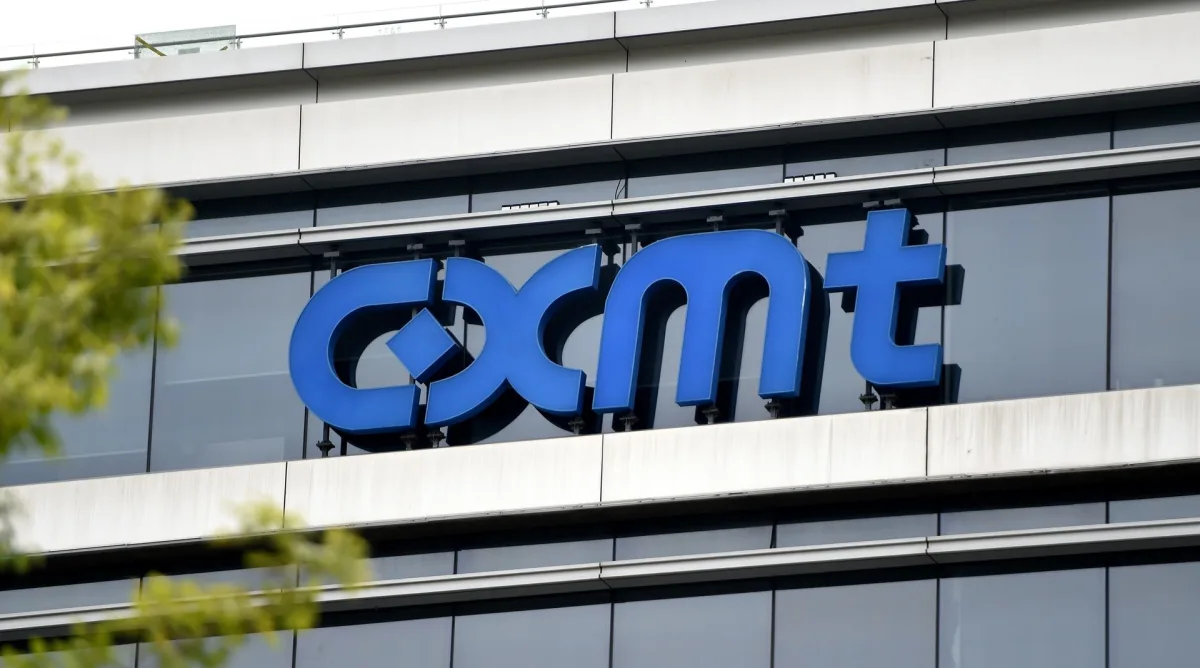
According to Reuters, citing three sources with knowledge of the matter, CXMT—China's leading DRAM manufacturer—is considering entry into 3D NAND flash production. The company is said to be developing plans for a 3D NAND R&D and pilot manufacturing line at its forthcoming second fab in the Beijing area. No timeline has been disclosed for when such a line might begin operations, though construction on CXMT's second Beijing facility has not yet commenced, suggesting the effort remains at least two to three years away. A research institute that CXMT has set up in Beijing is also reportedly pursuing NAND flash development as part of its research agenda, according to one person familiar with the matter. The company has made no official announcement regarding any 3D NAND plans.
Details remain scarce on the specifics of CXMT's proposed 3D NAND technology, including layer counts, process nodes, performance targets, or manufacturing scale. However, Reuters's sources indicate that CXMT has already approached potential customers to discuss its NAND strategy. One prospective buyer is described as a newly formed entity planning to incorporate CXMT NAND components into storage systems designed for artificial intelligence and supercomputing use cases.
Should CXMT advance this 3D NAND initiative to commercial production volumes, the company would move beyond its traditional DRAM focus and directly compete with Yangtze Memory Technologies Company (YMTC), China's other major memory chipmaker. Historically, China's two leading memory producers have operated in separate domains—YMTC in 3D NAND and CXMT in DRAM—where both have achieved significant progress. The apparent shift suggests both companies are pursuing a model similar to Micron, Samsung, and SK hynix, which supply both memory types. YMTC itself is reportedly investigating DRAM production as part of this same trend.
Industrial Policy or Market Logic?
From a purely commercial standpoint, CXMT's rumored 3D NAND venture appears questionable. The company has emerged as China's dominant DRAM supplier and reported $22.41 billion in revenue and $11.57 billion in net profit during the first half of the year, reversing years of losses. Despite this turnaround, CXMT remains substantially smaller than the Big Three memory suppliers—Micron, Samsung, and SK hynix—leaving considerable room for growth within DRAM, where it already possesses manufacturing expertise, process technology, fabrication plants, and an established customer base. The artificial intelligence boom offers CXMT a compelling case to concentrate investment on advanced DRAM products and HBM3E technology, both arguably more strategically important than commodity 3D NAND.
Pursuing 3D NAND would require CXMT to master entirely different manufacturing processes, develop new technical capabilities, and acquire specialized equipment—a significant undertaking that lacks clear economic justification from a business perspective. Yet from Beijing's vantage point, the calculus differs substantially. Establishing CXMT as China's second major 3D NAND manufacturer aligns neatly with the government's broader semiconductor independence objectives.
CXMT itself was founded with capital from the Hefei municipal government, which held a 37 percent stake during the company's initial public offering, and has benefited from China's Big Fund—the state-backed semiconductor investment vehicle. This ownership structure means federal and local authorities maintain influence over CXMT's strategic direction and actively exercise that control. Whether CXMT possesses the technical and operational capacity to become a viable 3D NAND producer remains an open question.