Inside EVGA's Collapse: How Nvidia's Pricing Demands and Ray Tracing Gambles Fractured a Partnership
A former EVGA product manager has detailed the mounting tensions that led to the graphics card maker's 2022 exit from the GPU market, tracing the breakdown to Nvidia's direct competition and aggressive margin requirements.
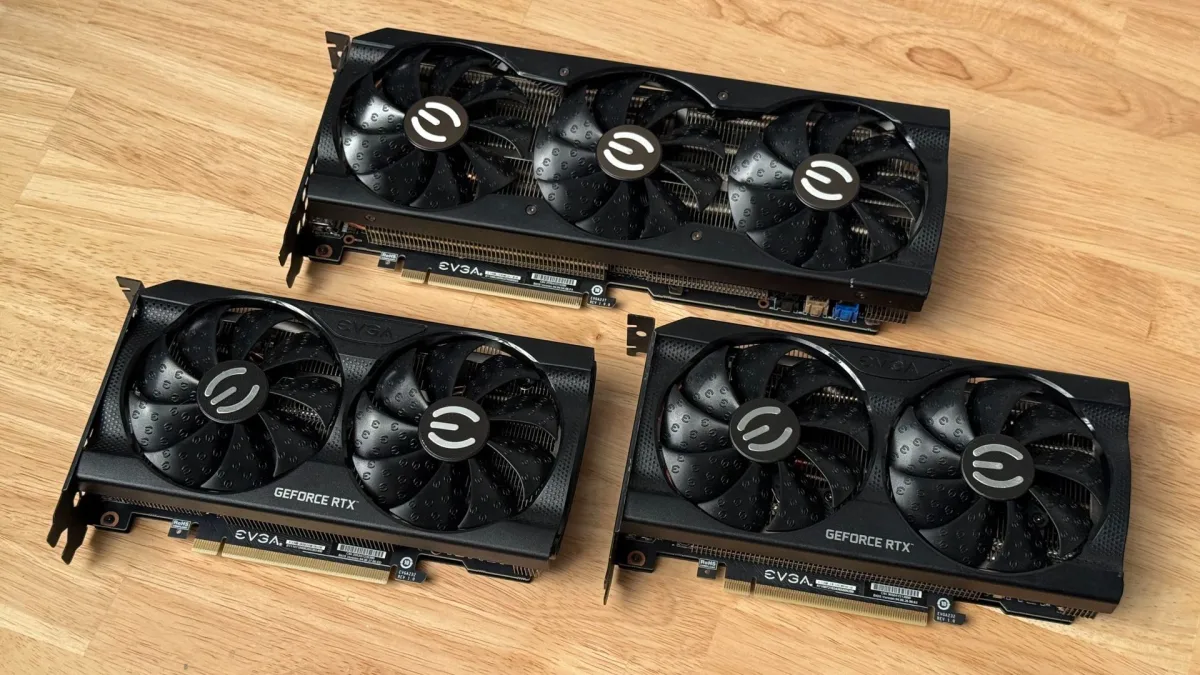
Brendon Ray Hedrick, who managed products at EVGA before departing in 2019, has published a detailed account of the deteriorating relationship between the two companies that ultimately ended in EVGA's withdrawal from the GPU business in 2022. At the time he left, Hedrick anticipated the partnership would unravel within roughly four to five years—a forecast that proved prescient when the split occurred just three years later.
The friction began in 2016 when Nvidia introduced its Founders Edition graphics cards, marking a strategic shift. Unlike previous arrangements where EVGA sold Nvidia reference designs under its own branding, the chipmaker now sold directly to consumers, effectively competing with its board partners and circumventing their traditional distribution role.
Yet the most damaging pressure came through Nvidia's pricing mandates. The company required partners to offer models at the officially announced MSRP, even if doing so meant operating at a loss. Board partners faced reduced chip allocations if they refused to comply, forcing them to manufacture unprofitable products simply to maintain access to adequate GPU supplies.
The models on which we did not lose money had better circuit boards and cooling of our own, but they also carried a substantial premium. To a customer comparing them with the advertised starting price, it could look as though EVGA was charging an enormous amount just for those additions.
Brendon Ray Hedrick
As Nvidia's Founders Edition cards improved with successive generations, the value proposition of pricier third-party alternatives eroded. Loss-leading models consistently sold out while customers holding premium variants extended their replacement cycles by a generation or more. For a company like EVGA, this dynamic proved catastrophic. Hedrick explained that while Nvidia could weather such market shifts, a leaner operation dependent on GPU revenue faced existential risk when customers deferred purchases.
Nvidia's 2018 introduction of real-time ray tracing on the RTX 20-series presented another challenge. Hedrick recalled his anxiety about whether EVGA possessed the financial resilience to absorb the difficult early phase of this technology transition, when only a handful of games supported ray tracing and consumers questioned whether the upgrade justified the cost.
Nvidia could afford a long technological bet. My concern was whether a company as lean as EVGA could comfortably absorb the difficult part of it.
Brendon Ray Hedrick
The prediction Hedrick made upon his 2019 departure materialized in 2022 when EVGA announced it would cease manufacturing partner GPUs with the arrival of the RTX 40-series, exiting the market once RTX 30-series inventory depleted. At that juncture, Nvidia GPUs represented 78 percent of EVGA's revenue while delivering minimal profit contribution. Reports indicated that while lower-end products like the RTX 3060 remained marginally profitable, EVGA absorbed losses of hundreds of dollars per RTX 3080 and higher unit sold.
Though Nvidia's policies bear significant responsibility, other factors compounded EVGA's vulnerability. The company outsourced manufacturing to third parties, maintained exceptionally generous customer service policies, and concentrated operations in North America and Europe. This geographic focus resulted in lower unit volumes than competitors, meaning fixed costs consumed an even larger share of already razor-thin margins. While EVGA's customer-first reputation made it a beloved brand, these operational choices ultimately left it exposed to the pressures that Nvidia applied.