Qiagen Anchors Drug Discovery AI in Curated Knowledge, Not Just Models
The bioinformatics company argues that trustworthy AI agents for pharmaceutical research require human-vetted data foundations as much as advanced language models, grounding its Discovery Platform in 25 years of expert curation.
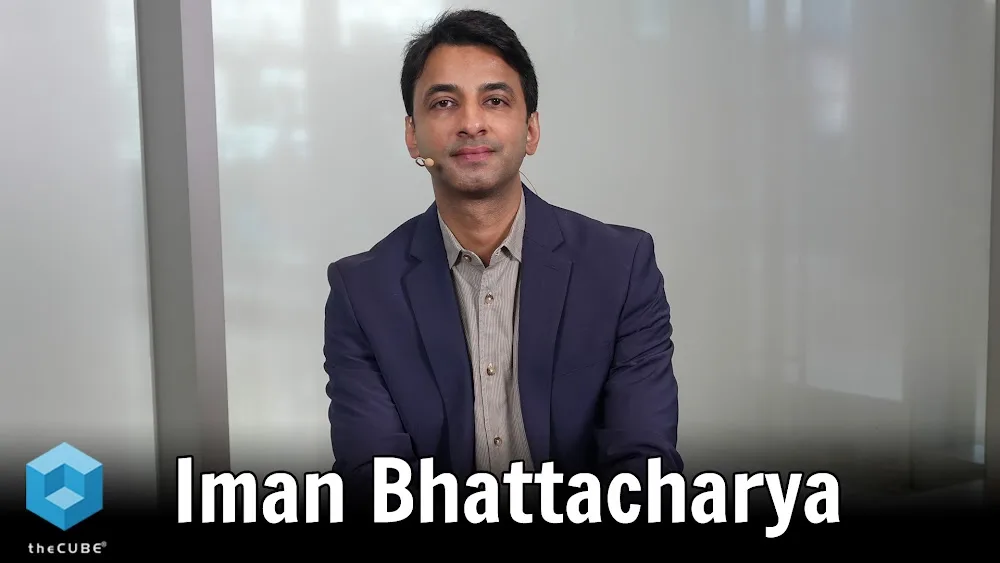
Qiagen N.V. contends that artificial intelligence agents used in drug discovery depend on reliable, well-sourced information as fundamentally as they depend on capable underlying models. Within the biopharma sector, this translates to equipping agents with data that carries transparent attribution and sufficient background to justify their conclusions.
Knowledge graphs can serve as the contextual layer supporting AI agents in this domain, according to Iman Bhattacharya, senior global product marketing manager at Qiagen. Yet the company's strategy places human review and validation at its core.
I think while everybody is talking about AI and the model layer, we deeply focus on the knowledge foundation and the knowledge content of it. And we believe that AI is here to stay. AI is here to elevate yourself, but it has to be deeply grounded in human curation.
Iman Bhattacharya, Qiagen
Bhattacharya shared these remarks with theCUBE Research's John Furrier during GraphSummit, in a conversation broadcast through theCUBE, the livestreaming platform operated by SiliconANGLE Media. The discussion centered on how manually verified knowledge and auditable information sources can anchor AI agents deployed in pharmaceutical drug discovery.
Drug discovery agents draw on curated knowledge
Qiagen's bioinformatics division has spent more than 25 years manually curating biomedical datasets, drawing on the expertise of over 150 professionals holding MD or PhD credentials, Bhattacharya explained. This foundation now underpins the Qiagen Discovery Platform, which combines Model Context Protocol, or MCP, connectivity with an agentic Discovery Explorer tool layered atop the vetted knowledge repository. In May, the company partnered with Nvidia Corp. to accelerate the development of graph-based artificial intelligence for pharmaceutical discovery.
It's not just data or it's not just knowledge foundation. It's actually a complete system. The goal is not to make it siloed. The goal is to make it be a part of that ecosystem.
Iman Bhattacharya, Qiagen
Precision emerges as the critical dimension where this architectural approach proves its value. Pharmaceutical firms evaluate success through how quickly they can identify accurate therapeutic targets relative to competitors, and agents that generate false or unverified answers undermine that objective, Bhattacharya stated.
https://www.youtube.com/embed/-cRrTcD3Zjc?feature=oembed
Your agent will start to provide output, and it will hallucinate. It will never say no. We have seen that it will provide synthetic results. But ultimately, what matters is you produce something, your output is something which is good and traceable.
Iman Bhattacharya, Qiagen