Tower Semiconductor commits $4 billion to transform Japan into optical chip manufacturing powerhouse
Tower Semiconductor and Japan's government will jointly fund a $4 billion expansion that will increase the company's optical connectivity output 40-fold by 2029, positioning it as a critical supplier for AI infrastructure.
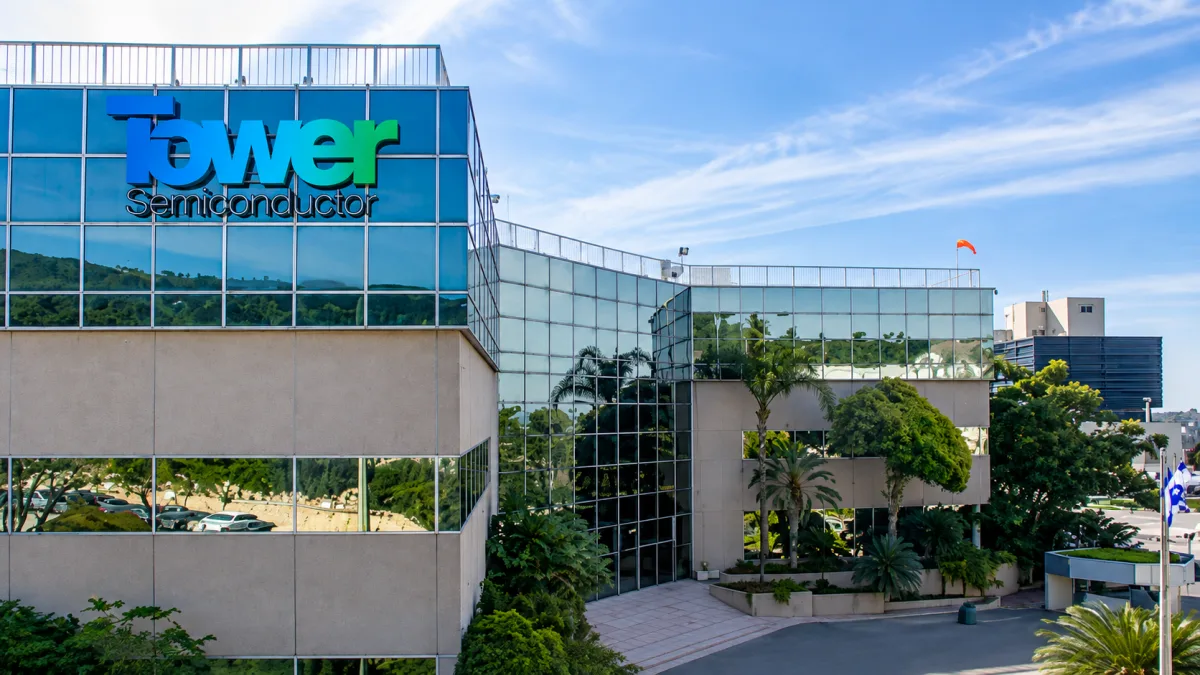
Tower Semiconductor and Japan's Ministry of Economy, Trade and Industry are partnering on a $4 billion investment to reshape the chipmaker's Japanese operations into a major hub for optical-connectivity semiconductors. The initiative will repurpose an inactive facility, expand an existing 300mm fab, and construct an additional 300mm plant, ultimately raising Tower's Japanese production capacity to 45,000 300mm wafers monthly by 2029.
Track One: Convert and expand
The first phase involves retrofitting Tower's dormant 200mm Fab 6 in Arai, Niigata Prefecture, into a 300mm facility dedicated to silicon photonics and advanced optical packaging—the process of bonding electronic and photonic integrated circuits together. Simultaneously, the company will increase output at its 300mm Fab 7 near Uozu, Toyama Prefecture, for Silicon-Germanium Electronic Integrated Circuits and Photonic Integrated Circuits.
Fab 7 is already fully qualified and producing various SiGe EICs and SiPho PICs using multiple process technologies, including the latest TPS65SG and other TPS65-series 65nm-class SiGe nodes, along with TPS45PHD 45nm-class SiPho manufacturing technology. The expansion aims to satisfy surging demand for optical engines from the AI sector. This strategy allows Tower to boost output incrementally as equipment arrives, avoiding delays associated with qualifying an entirely new fab and process flows.
Track One is targeted to reach full production readiness in the fourth quarter of 2027. Tower forecasts this phase will generate approximately $3.6 billion in revenue and $1.2 billion in net profit during fiscal year 2028.
Track Two: Build new fab
The second phase, running concurrently, represents a significantly larger undertaking. Tower plans to erect another 300mm manufacturing facility adjacent to Fab 7 in Uozu, substantially multiplying the company's capacity for SiGe EICs and SiPho PICs. This arrangement will give Tower two Japanese sites producing these components and one—the converted Fab 6—assembling optical engines from them.
The second phase is anticipated to meaningfully contribute to Tower's financial performance starting in 2029.
Tower anticipates reaching Japanese production capacity equivalent to 45,000 300mm wafers per month in 2029, roughly 40 times the 2025 level, and plans to recruit approximately 200 employees. The project's magnitude reflects accelerating demand for optical connectivity in AI infrastructure. Tower commands more than 80% of the contract manufacturing market for optical communications semiconductors deployed in servers and counts major industry players including Marvell among its customers, necessitating substantial capacity.
Tower will contribute $3 billion toward its two expansion phases, with Japan's Ministry of Economy, Trade and Industry supplying the remaining $1 billion, totaling approximately $4 billion.
Tower acknowledges that competitors such as Intel, TSMC, and GlobalFoundries currently lead in co-packaged optics, making the Japanese investment about more than capacity alone—it establishes groundwork for Tower's CPO strategy. Currently, Tower intends to introduce CPO and preceding manufacturing technologies to its Uozu facility. Though the company has not revealed specifics regarding its CPO roadmap, its latest EIC and PIC process technologies should suffice to bring optical components nearer to compute silicon.
Tower's Japan restructuring
Tower Semiconductor's substantial expansion in Japan coincides with a reorganization of its local manufacturing footprint. Understanding this shift requires reviewing the company's history in the region.
Tower established its Japanese manufacturing presence in 2014 through a partnership with Panasonic, creating TowerJazz Panasonic Semiconductor Co. with Tower holding a 51% majority stake while Panasonic retained 49% and contributed its fabs in Uozu, Tonami, and Arai. When Panasonic exited the semiconductor sector in 2020, Panasonic's ownership stake transferred to Nuvoton Technology Corporation Japan.
The most valuable asset is Fab 7 in Uozu, a 300mm facility that Tower has progressively converted from its Panasonic origins into a key specialty manufacturing site supporting 65nm-class SiGe and 45nm-class SiPho technologies.
Tower and Nuvoton are now dismantling the original TPSCo structure. Under an agreement disclosed in March 2026 and slated to finalize in April 2027, Tower will assume complete ownership and operational control of Fab 7 and its 300mm foundry operations, while Nuvoton will gain full ownership of TPSCo and Fab 5 in Tonami. Concurrently, Tower is reviving the former Arai facility, Fab 6, as a 300mm SiPho and advanced optical packaging center and intends to build another 300mm fab next to Fab 7.
Essentially, what began as a relatively modest acquisition of Japanese manufacturing capacity from Panasonic over a decade ago is transforming into a major Tower-controlled 300mm SiPho and SiGe production center, poised to multiply the company's output and revenue several times over.