British Columbia sues OpenAI for school demolition costs after ChatGPT-assisted shooting
The Canadian province is demanding OpenAI and Sam Altman pay to rebuild Tumbler Ridge Secondary School and cover emergency response costs after an 18-year-old used ChatGPT to plan a mass shooting that killed eight people in February 2026.
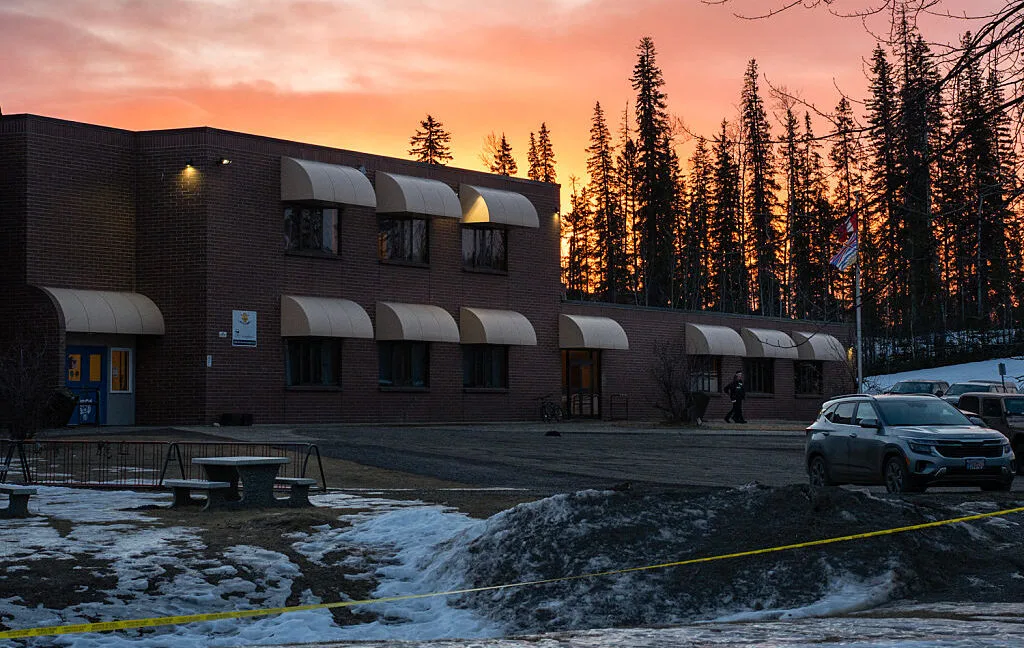
Families of victims from one of Canada's deadliest mass shootings have already filed suit against OpenAI, alleging the company failed to alert law enforcement despite learning in advance that the attacker was using ChatGPT to organize the violence. Now the province of British Columbia has joined the legal action, revealing the staggering costs of responding to and recovering from the tragedy. According to the province, OpenAI and its chief executive owe the small remote mining town far more than an apology—they must fundamentally change how ChatGPT handles violent content and then finance the community's reconstruction and healing.
The complaint, filed Monday, details how Tumbler Ridge Secondary School required demolition following the February 2026 shooting in which 18-year-old transgender shooter Jesse Van Rootselaar killed five students and one education assistant before taking their own life. Eight people died in total, including Van Rootselaar's mother and half-brother, whom the shooter killed before arriving at the school. The lawsuit states the secondary school once stood "in the heart of the town, both geographically and culturally," but transformed into an inescapable "symbol of the trauma" after the attack.
Roughly 160 students, educators, and staff members "were trapped in classrooms and closets" throughout the school for extended hours, leaving them too emotionally damaged to return. To offer "at least some small relief to those who have suffered the most intensely," the community began demolition in August and aims to open a replacement facility at a different site by year's end. British Columbia contends that OpenAI and Altman must fund the new school construction and cover extensive emergency expenditures that would never have occurred absent "this tragedy and its foreseeable consequences." The province also seeks court-ordered injunctive relief, demanding OpenAI reprogram ChatGPT to automatically halt violent exchanges.
B.C. demands access to the ChatGPT conversation records
British Columbia and the local school board's Board of Education have filed an urgent motion requesting the court compel OpenAI to release Van Rootselaar's chat logs to the public for the first time. To date, OpenAI has shared the logs exclusively with the Royal Canadian Mounted Police. When asked whether there are plans to make the chat logs public—similar to how a Florida law enforcement agency proceeded following a prior ChatGPT-related shooting at Florida State University—the RCMP declined to respond. Instead, the force directed Ars to a July statement confirming only that police are examining information from online accounts, while noting that "it is important to understand that the absence of publicly disclosed details does not mean investigators do not have that information."
OpenAI declined to comment on the lawsuit or the requested remedies. The company has justified its decision to withhold Van Rootselaar's violent chat logs by citing privacy protections, despite human review teams recommending the logs be shared with authorities. In a statement to Ars, a company representative said: "what happened in Tumbler Ridge was an unspeakable tragedy, and our thoughts remain with the victims, their families, and the entire community. OpenAI remains committed to working collaboratively with government and law enforcement officials, and continuing to advance our ongoing safety work."
British Columbia argues that OpenAI has taken no meaningful steps to improve ChatGPT's safety following multiple mass shootings that demonstrated "recurring" instances of violent ChatGPT use. The province questions the company's stated rationale for concealing the threat, suspecting OpenAI sought to sidestep establishing a policy requiring it to report violent users to police and expose the public to the genuine dangers posed by chatbots. British Columbia accuses OpenAI of withholding the chat logs to shield its projected $1 trillion initial public offering.
According to British Columbia, OpenAI is doing little to address the most severe violent threats. The lawsuit notes that OpenAI claimed it made an "attempt" to block violent conversations in December 2025, yet this change neither prevented Van Rootselaar's harmful use during that period nor in subsequent months. At a press conference reported by The Wall Street Journal, B.C.'s attorney general, Niki Sharma, stated that "we should be asking them why" they will not disclose the chat logs.
In any other circumstance where a person aids, encourages or conspires to commit a criminal offense or is criminally negligent, they can be investigated, prosecuted, and judged. There is no AI exemption to those criminal law principles.
Niki Sharma, British Columbia attorney general
"We all know the victims"
The February 10, 2026 shooting devastated Tumbler Ridge, a community of just 2,700 residents. A town official captured the scale of loss by observing, "We all know the victims." Tumbler Ridge Secondary School shut its doors on the day of the shooting and never reopened. For students attempting to move forward, this created a severe problem: the town has no alternative school. Instead, students have been learning in a temporary facility on an improvised campus "assembled first from fourteen Ministry of Forestry trailers," later upgraded to "larger modular classrooms."
Assembling a functional school under emergency conditions proved neither inexpensive nor straightforward, according to the school district's filing. Officials had to "furnish it, recruit and train replacement educators for local staff who could not return, and reorganize instruction around the absence of murdered students and colleagues." The old building's demolition required additional expenditure, and these emergency outlays do not qualify as "recurring public services that governments fund through taxation and spread across all taxpayers," the complaint states.
Beyond the school, the community is constructing a wellness facility, as demand for mental health counseling has remained elevated since the tragedy. Immediate and sustained medical care, victim assistance, and trauma-informed psychological services are viewed as essential for years ahead. The complaint underscores that OpenAI should have deliberately weighed the shooter's threat against the town's small size:
Unlike other larger communities, in Tumbler Ridge there were no redundancies of personnel or facilities to carry the community following the tragedy. There was no other school building to house students for education or counseling following this trauma. There were few available adults to step in for teachers and administrators who were directly impacted by the assault. Students, parents and all those impacted needed immediate support and counseling, and there simply were not enough people in this small town to match the need.
British Columbia lawsuit
The town lacked "substitute teachers, no standby clinicians, and no extra police officers," the complaint alleged, and the frontline workers present "were themselves traumatized." British Columbia deployed temporary personnel, who required temporary housing, to meet the surge in emergency service demand. In the three months following the shooting, "Child & Youth Mental Health alone delivered well over 900 counseling sessions to more than 100 unique children and families, and Northern Health treated more than 130 unique adults," according to the lawsuit. The province has since transitioned from emergency response to long-term recovery support, including establishing a long-term grief-and-bereavement working group that will require substantial funding.
British Columbia and the school district have also financed an "extraordinary policing response." This continued presence remains necessary, they argue, because residents fear potential copycat attackers represent a genuine danger. The complaint states that the RCMP has already investigated copycat threats. "Demand for scheduled mental-health services remains high and spikes around anniversary dates and other triggering events; these services are expected to be needed for years to come," the lawsuit said.
ChatGPT "reinforced" violent ideation
OpenAI detected the violent conversations in June 2025. At that moment, human reviewers "examined the flagged conversations" and "concluded that the shooter presented a credible and specific risk of gun violence to real people," according to whistleblowers who spoke to the WSJ. OpenAI's leadership, however, intervened to prevent reports to law enforcement, overriding their own safety personnel and asserting that "the matter did not satisfy a 'higher threshold' for 'credible and imminent' threat reporting."
Rather than alerting the RCMP or notifying the community, OpenAI simply deactivated the account—a step that proved ineffective since Van Rootselaar simply created a second account. During this period, OpenAI was publicly stating that any violent exchanges would undergo human review and be reported to law enforcement to prevent real-world harm. ChatGPT had already been connected to the FSU shooting and to a CyberTruck bombing in Las Vegas, and British Columbia contends that the Tumbler Ridge shooter should have been identified as a threat comparable to those users.
Following the whistleblowers' disclosure of OpenAI's failure to notify authorities, OpenAI claimed it "was reluctant to make such referrals because they would require it to disclose how its product contributes to the threat environment." British Columbia and the Tumbler Ridge community find this explanation unconvincing. They believe OpenAI intended that hollow assurances of improvement would shield "its valuation, and its anticipated public offering." The youngest victims who actually required protection were 12 and 13 years old, they noted.
The complaint suggests OpenAI's defense will probably focus on blaming Van Rootselaar for their violent inputs while minimizing ChatGPT's role in generating responses. However, British Columbia argues that ChatGPT's defect lies not with its users but with its architecture. OpenAI allegedly disabled a feature that would have terminated the Tumbler Ridge conversations, then rolled out a more compliant model that it already knew had enabled users intent on real-world violence. Since ChatGPT's introduction, the model instructions have always directed the chatbot to presume "good faith" and "not to probe intent" when users initiated violent discussions, and British Columbia wants the court to mandate changes to these two specific instructions.
The community remains determined to access the chat logs, as does British Columbia, which is financing their recovery. The province alleges that the ChatGPT records will demonstrate that OpenAI's product dangerously "facilitated the mental instability of the shooter" by promoting, elaborating, and reinforcing violent ideation "instead of interrupting it or directing the user to real-world help."
If the lawsuit succeeds, OpenAI could face substantial damages, including an order to cover emergency response expenditures. Punitive damages could also be imposed if the failure to warn police is found to be intentional. The complaint states that OpenAI "repeatedly represented to users and the public that it detected users who present a risk of harm to others, routed such conversations to trained reviewers authorized to act, and referred imminent threats of serious physical harm to law enforcement." The lawsuit continues: "Having held itself out as voluntarily undertaking and performing exactly the protective function" that a law imposing a duty to warn requires, "OpenAI cannot disclaim the duty it publicly assumed."
Altman's apology falls short
In April 2026, Altman publicly acknowledged that OpenAI let down the Tumbler Ridge community. "I am deeply sorry that we did not alert law enforcement to the account that was banned in June," Altman said. British Columbia counters that the account was never actually banned, and views this apology as "an admission" that "OpenAI did not notify law enforcement after its safety team identified the risk of violence."
To guarantee that the most violent conversations are consistently reported to police, the province has asked the court to mandate that OpenAI conduct regular independent audits. The company's actions were "despicable," the lawsuit stated. "Had OpenAI implemented a meaningful user ban," the shooter would not have retained access to ChatGPT, which allegedly "increased the shooter's lethality." And had OpenAI reported the user to law enforcement, weapons in the shooter's possession could have been confiscated, since the shooter was already known to local authorities, the lawsuit alleged.