OpenAI's GPT-6 Astra decodes 217-year-old Napoleonic cipher in six hours
An engineer at SentinelOne used the multimodal AI model to crack a military message that had remained unread since 1809, requiring only a single image and prompt to complete the task.
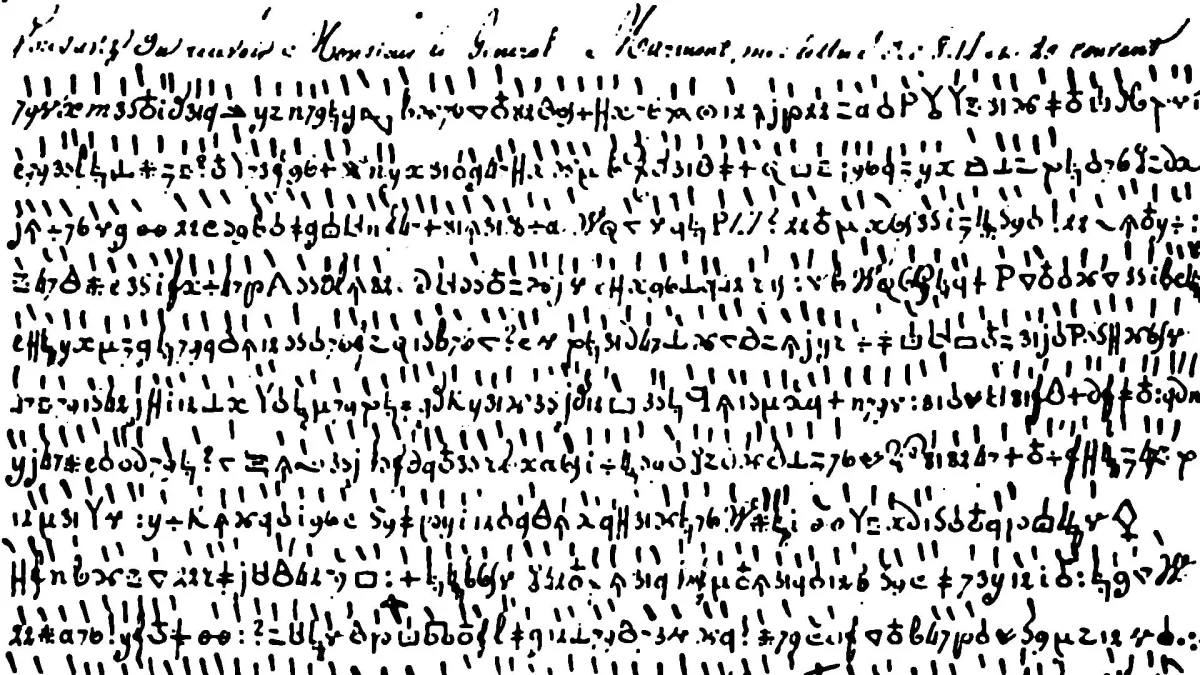
Carter Church, a cybersecurity engineer at SentinelOne, deployed OpenAI's GPT-6 Astra to decipher a message encoded during the Napoleonic Wars that had resisted decryption for more than two centuries. The cipher, which appeared on Cryptiana's Unsolved Historical Ciphers list for decades, yielded to the AI system in approximately six hours after Church provided only a single image and a goal statement.
I used GPT-6 Astra to break an unsolved cipher to one of Napoleon's generals that had gone unread for 217 years. What makes this impressive isn't actually the codebreaking, but that Astra completed the entire multi-modal workflow in ~6 hours from a single image and goal.
Carter Church
The decrypted message originated from the office of Eugène de Beauharnais, Napoleon's stepson and Viceroy of Italy, though no individual author is identified. The communication functioned as a military briefing directed toward French General Auguste de Marmont, conveying Napoleon's strategic directives. Marmont would have used an official military codebook from that period to read the message in 1809, and the document has likely remained unread by anyone since that date.
Church notes that the newly deciphered text provides previously missing context for Napoleon's 1865 memoir. That work includes a portion of Napoleon's order regarding preparations for the Austrian invasion but terminates mid-sentence, with the text stating that Marmont should not be constrained by "a handful of ..." The entry from Cryptiana's Unsolved Historical Ciphers now completes this phrase with "a gathering of rabble."
The encoded letter begins with a plain text introduction in French, followed by 24 rows containing numbers, letters and custom symbols. Astra processed this 19th-century military secret efficiently. According to Church's account, the system identified a partial key that had not previously been connected to this particular letter and subsequently "cracked the rest with its own simulated-annealing solver."
The solution has been validated by Satoshi Tomokiyo, who administers the Cryptiana database, which now marks the cipher as solved. Church has made the complete solution package available for download, including a script that can regenerate the decrypted text. The solution is, as Church explains, "mechanically testable against the ciphertext," allowing anyone to verify the accuracy of Astra's work.