Dutch researchers equip drones with whisker sensors for navigation in darkness and dust
Scientists at Delft University of Technology have developed a tactile sensing system modeled on animal whiskers that enables sub-100-gram drones to navigate by touch alone, operating where cameras and GPS fail.
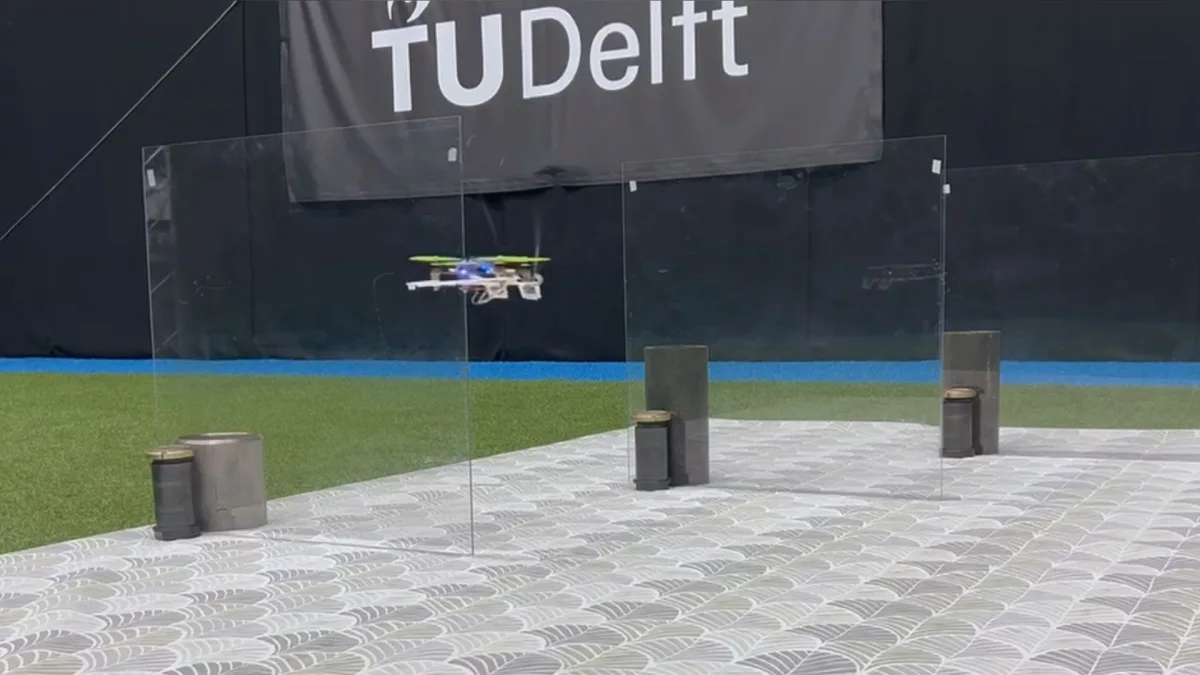
Nature provided the blueprint for a novel navigation approach. Researchers at Delft University of Technology in The Netherlands have created a lightweight whisker-based tactile sensor system that permits drones to find their way using touch rather than vision. The technology targets tiny autonomous aircraft under 100 grams in weight, which struggle to carry conventional sensors, processors and batteries. Traditional navigation tools—cameras, rangefinders and LiDAR systems—prove unreliable in challenging conditions such as darkness or environments thick with dust and smoke.
The whisker approach addresses a fundamental constraint of miniature aerial platforms. According to Dr. Salua Hamaza, Associate Professor of Aerial Physical Interaction and Embodied Intelligence, "Here, we aim to equip drones with rich tactile sensing — not for manipulation in the air, but for a novel concept of tactile navigation: using touch to explore and fly through the unknown." The challenge lies in making tactile sensing practical for flight: it must remain lightweight, operate with minimal latency, and consume little power. "But this comes with a challenge: for tactile sensing to work on drones, it needs to be lightweight, low-latency, and low-power. Inspired by nature, we found the answer in whiskers."