OpenAI's GPT-6 Astra Navigates World of Warcraft Without Seeing the Game
The AI model cleared the orc starting zone in 40 minutes with zero deaths, using only network traffic and server data rather than rendered visuals.
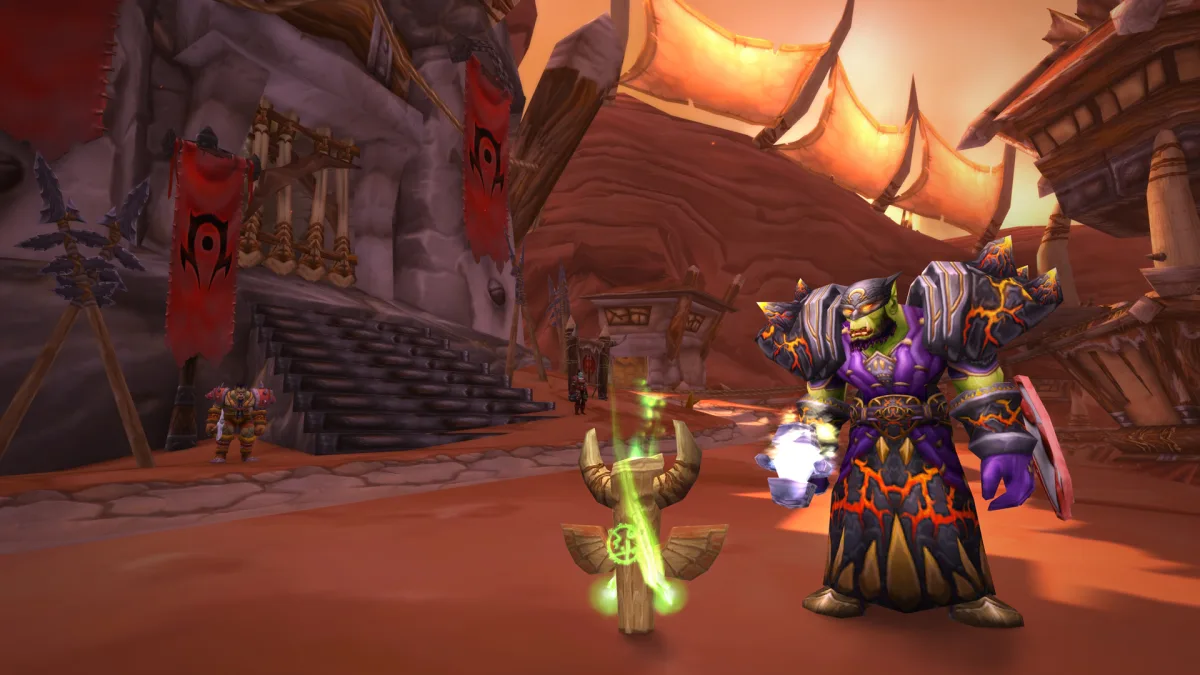
OpenAI's GPT-6 Astra successfully completed the Orc starting area in World of Warcraft in 40 minutes without a single death, according to the developer behind agent-wow. Rather than relying on visual rendering, the model extracted information from network traffic and quest data stored on the server itself. A single prompt in Codex, combined with agent-wow—an open-source client—enabled the AI to play on a private server. The YouTube documentation of the run notes that the agent "starts as a level 1 Orc, completes every quest in the Valley of Trials, and finishes the run in Sen'jin Village."
Agent-wow functions as an "AzerothCore WoW client designed for autonomous AI agent players," per its GitHub repository. The client refrains from hardcoding gameplay mechanics like movement, combat, or interactions, instead offering a "module system for agents to build" their own solutions. AzerothCore itself is open-source server software running WoW 3.3.5a, described as "the final build of Wrath of the Lich King," and agent-wow communicates with it through the game's native network protocol. The setup runs entirely on local private servers, with no connection to live WoW infrastructure.
The developer deployed OpenAI's flagship model, which launched early last month, configured with extra high reasoning effort—one tier below the maximum setting. The choice of World of Warcraft reflected the game's combination of long-term planning and immediate decision-making. The ultimate vision involves populating "an entire server with AI agents [to] see if they can clear Icecrown Citadel on heroic difficulty."
The agent constructed a single module to capture 28 distinct server message types, storing them in memory. A Python script continuously processes these messages to construct the agent's understanding of the game world and generates responses. The developer anticipated needing a higher-level abstraction but found that "In practice, it was more than capable of working at the protocol layer."
For quest information, the agent mined data directly from AzerothCore's SQL files, extracting quest givers, turn-in locations, and spawn points. The developer compares this approach to "how a human might spend hours on Wowhead to research quests," referencing the popular WoW information database. Accessing the server's native files offers an advantage over fan-maintained sites, since the server relies on these exact data structures while third-party resources may diverge. The project's public workspace documentation lists AzerothCore's source code as a resource, though the developer does not confirm whether this particular run utilized it.
The agent demonstrated deliberate strategic choices throughout the run. According to the developer, it followed prerequisite quest chains sequentially, disposed of unwanted items, equipped new gear, trained new abilities before entering the zone's final cave, and accepted both cave quests simultaneously to complete them together.
Navigation relied on a C++ helper tool that calculates routes between two points using AzerothCore's navigation mesh files, or mmaps. The Detour pathfinding library determines the optimal path, and the helper returns waypoints as coordinates or reports an error if no complete path exists. The developer notes that "from my research into heuristics-based bots, pathfinding is always one of the main challenges," yet describes the agent's pathfinding as "optimal." Notably, the agent even managed to "exploit map bugs" in areas where collision detection was incomplete.
This marks the second game the model has attempted. Shortly after its release last month, it played Portal using screenshots and positional awareness, completing the entire game in roughly 24 hours. The World of Warcraft run required no visual input whatsoever and covered only the opening zone, making the two approaches fundamentally different in scope and methodology.
Other developers have recently tackled gaming challenges with various strategies, including attempts at Pokémon Red using custom smaller models and a Jev decision model harness with Claude providing guidance. The developer's roadmap includes testing whether a single agent can independently reach level 80 and whether multiple agents can collaborate using the game's social systems to complete group content.