The Ryzen 9 5900X3D that never was: AMD's shelved 12-core gaming chip surfaces as engineering sample
An unreleased prototype of AMD's Zen 3 gaming processor has appeared on Chinese forums, revealing what the company chose not to bring to market alongside its successful 8-core X3D variant.
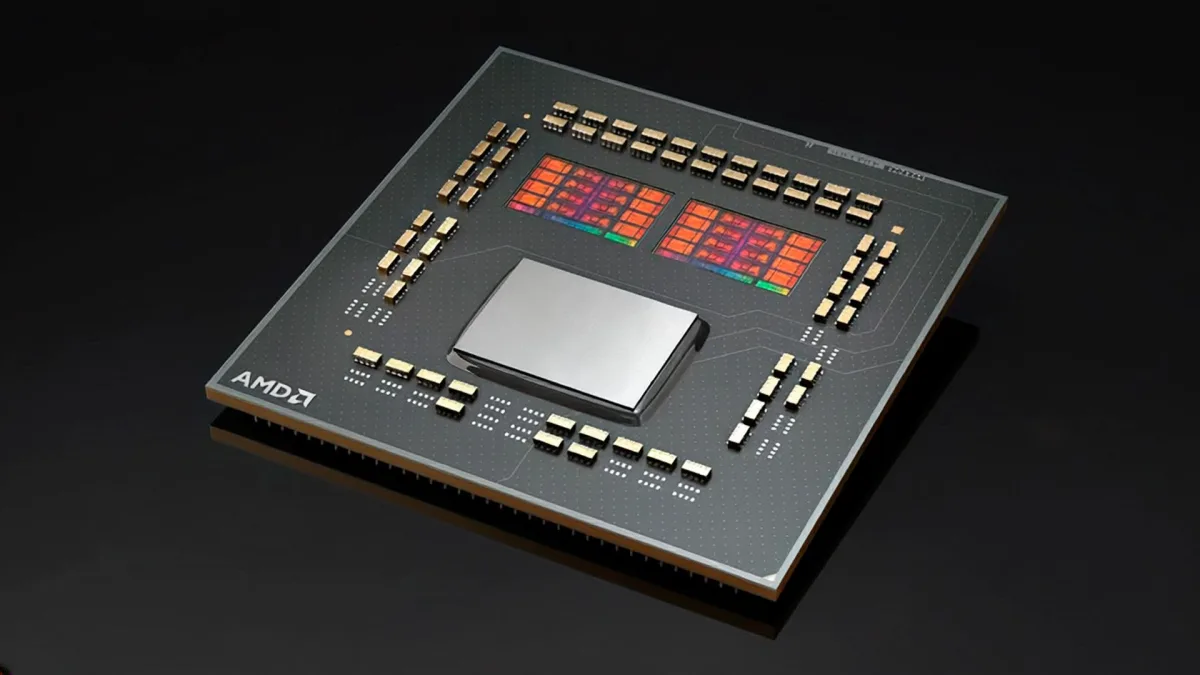
Four years into its market life, the Ryzen 7 5800X3D continues to rank among the top gaming processors available for the AM4 socket. Had AMD decided to release a 12-core variant with the same 3D V-Cache technology, it would have posed a formidable challenge to the 8-core chip's dominance. An engineering sample of the never-released Ryzen 9 5900X3D has now surfaced on the Chiphell forums in China, offering a glimpse into what might have been a powerful dual-purpose processor for both gaming and general computing tasks.
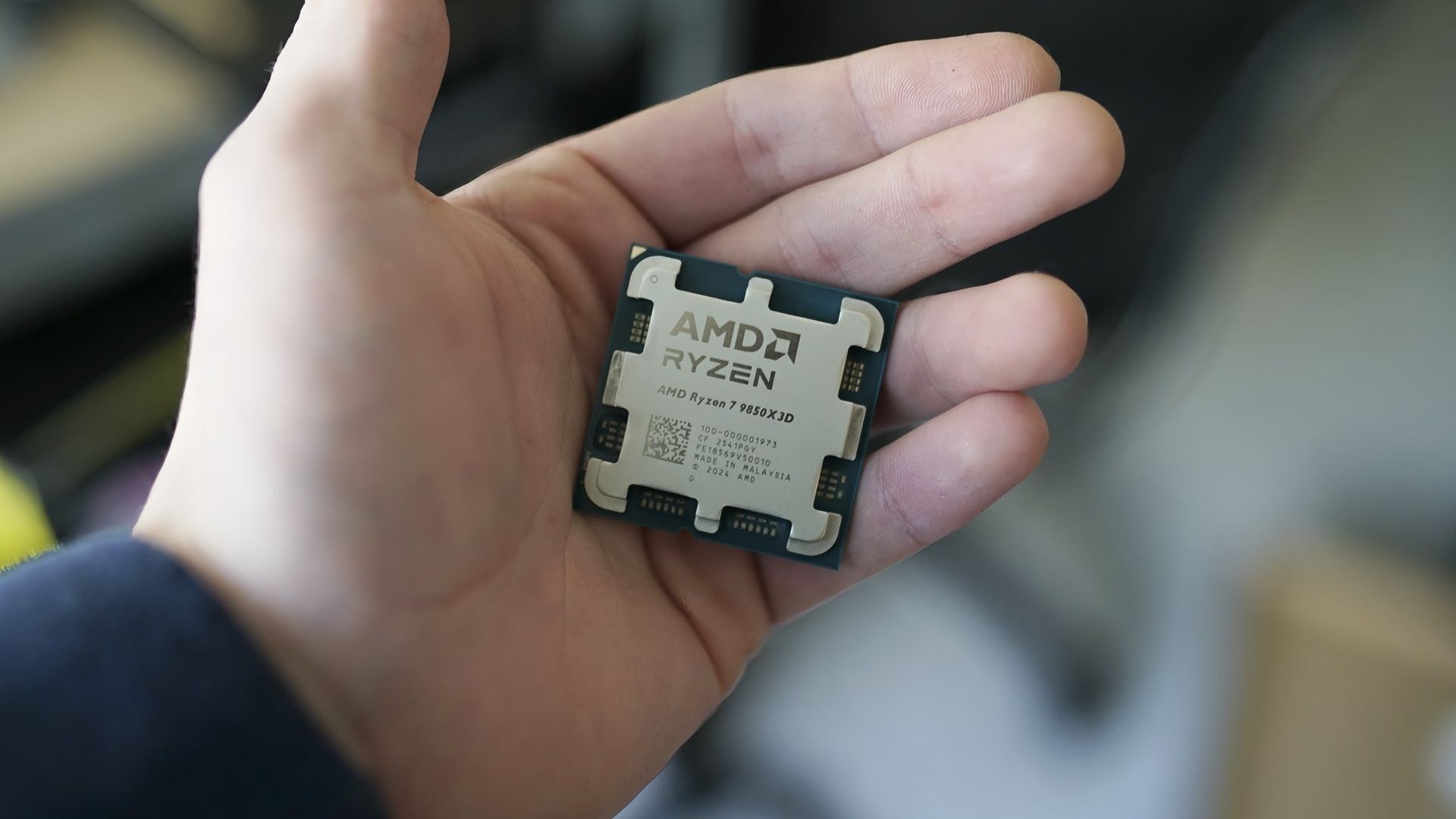
The existence of the Ryzen 9 5900X3D was hardly a secret. AMD revealed the processor at Computex 2021, where the company demonstrated a "12-core 3D Chiplet Prototype" that delivered up to 15 percent higher average gaming performance than the standard Ryzen 9 5900X when both were locked at 4 GHz.
The engineering sample discovered by a Chiphell user (model 100-000000652-20_48/32_Y) featured 128MB of L3 cache—twice the capacity of the conventional Ryzen 9 5900X. AMD achieved this by adding 64MB of 3D V-Cache to one of the chip's two Core Complex Dies (CCDs). CPU-Z data from the sample showed a 4,649 MHz clock speed, likely representing the maximum boost frequency. If that figure rounds to 4.7 GHz, the Ryzen 9 5900X3D would have launched with a boost clock only 100 MHz below the standard Ryzen 9 5900X.
The 128MB configuration represented just one direction in AMD's experimental work. During a facility tour, Gamers Nexus documented a 12-core Zen 3 prototype carrying an impressive 192MB of L3 cache, created by placing 64MB of 3D V-Cache on both CCDs of a Ryzen 9 5900X. A 16-core variant with the same 192MB L3 configuration also existed, which would have corresponded to a retail Ryzen 9 5950X3D had it reached consumers.
AMD Ryzen 9 5900X3D Specifications
Specifications are unconfirmed by AMD.
These prototype 12-core and 16-core Zen 3 X3D designs ultimately informed the development of the Ryzen 7 5800X3D, which went on to dominate gaming benchmarks for years. AMD's choice to pursue an asymmetric approach—concentrating 3D V-Cache on a single CCD—proved strategically sound for gaming workloads. The eight-core configuration of the Ryzen 7 5800X3D delivers outstanding gaming performance while avoiding the cross-die latency penalties that emerge when 3D V-Cache is stacked across multiple CCDs.
Though AMD declined to equip its 12-core and 16-core Zen 3 processors with 3D V-Cache, the company eventually adopted dual-stack configurations in subsequent generations. This shift led to the launch of the Ryzen 9 7900X3D, Ryzen 9 7950X3D, and more recently the Ryzen 9 9900X3D, Ryzen 9 9950X3D, and the Ryzen 9 9950X3D2.
A dual-stack setup delivers substantial benefits for productivity applications, but gaming scenarios tell a different story. Placing 3D V-Cache on both CCDs introduces cross-die latency and forces lower clock speeds due to thermal and power constraints—trade-offs that significantly harm gaming performance. AMD's own CPU rankings illustrate this dynamic: the Ryzen 9 9900X3D (12 cores, 128MB L3) trails the Ryzen 7 9800X3D (8 cores, 96MB L3) in gaming benchmarks, while the Ryzen 9 9950X3D (16 cores, 192MB L3) delivers gaming performance comparable to the Ryzen 7 9800X3D.
AMD's strategy reflects a clear understanding of gaming processor design: the eight-core, single-CCD formula is where the company's gaming focus lies. This approach has proven its worth through the Ryzen 7 5800X3D, followed by the Ryzen 7 7800X3D and Ryzen 7 9800X3D, establishing the benchmark for premium gaming CPUs.