Warranty Standoff Leaves Gamer With Melted RTX 5090 and No Recourse
A prebuilt PC buyer discovered his $5,245 system's GPU and power cables had burned up after sitting boxed for over a year, only to find himself caught between a system builder and GPU manufacturer, each refusing responsibility.
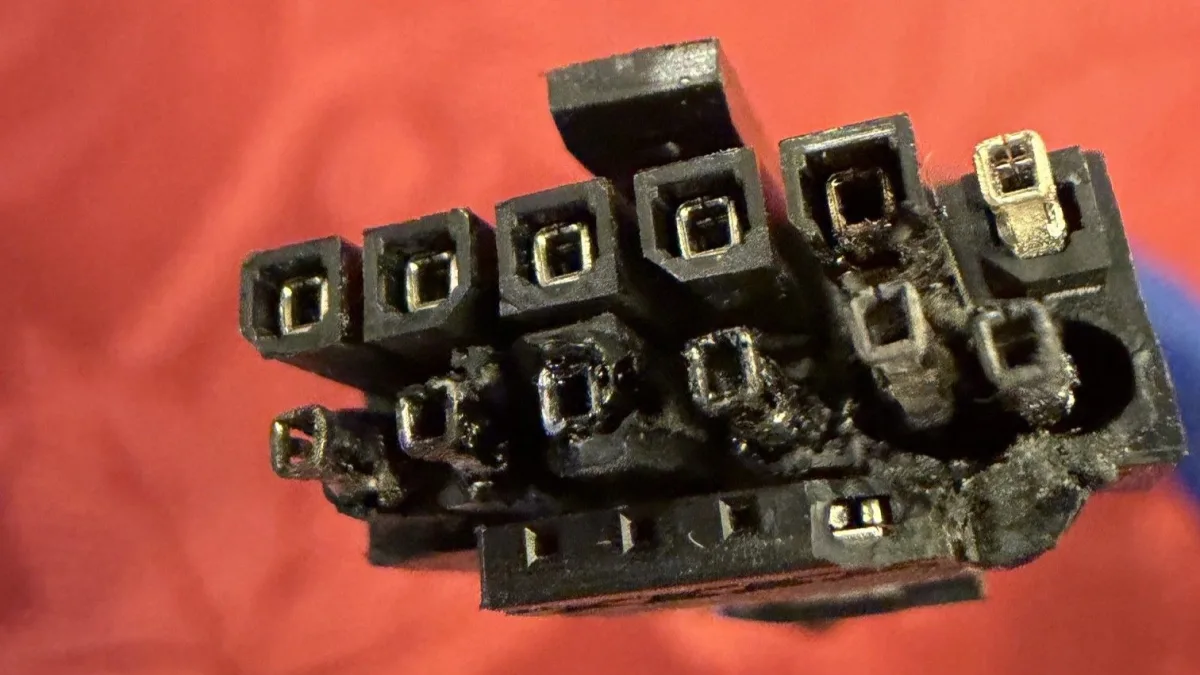
When a graphics card with a 12VHPWR or 12V-2x6 power connector fails catastrophically, the person who built the machine typically bears the burden of pursuing a warranty claim. The situation becomes far more complicated, however, when a third party assembled the system and two companies begin deflecting blame while a customer faces a destroyed GPU, power supply, and cabling.
This scenario played out for Anthony DeMarco, whose father bought him a Digital Storm Corsa prebuilt system as a graduation gift. DeMarco requested the purchase before RAM prices increased. The machine arrived in May 2025 and contained an AMD Ryzen 9 9950X processor, 2TB Crucial T700 Pro SSD, 64GB Kingston Fury RGB RAM, and an Nvidia GeForce RTX 5090 from PNY. The total price was $5,245.00 before tax. DeMarco tested the system upon receipt, then packed it away until he began his job in August 2026. Within two weeks of receiving the computer, trouble emerged.
"I noticed a strange burning smell from near my computer," DeMarco recalled. "The next day I noticed my monitor screen kept flickering. I then used Claude to try to figure out the issue and it pointed to the GPU, and then I checked the wires and noticed them very melted and burned. I immediately powered off my computer so hopefully my GPU is still functional."
The damage extended well beyond the graphics card itself. The power supply—a 1,000-watt semi-modular unit with 80-Plus Gold certification from Digital Storm, the default option for RTX 5090 configurations—suffered the most severe harm. The cable connecting to the power supply had melted completely, with the connector head fused into the unit and bare wires exposed at both ends. DeMarco maintained he had verified all connections after his father formally handed over the system.
Navigating the warranty maze
DeMarco faced a choice between two potential sources of help: Digital Storm, which assembled the PC, and PNY, which manufactured the GPU. The timing of his purchase created a critical problem. Digital Storm provides a one-year warranty on components and three years on labor—and that one-year parts coverage had expired. The individual components, however, carried their own manufacturer warranties. PNY backs its GeForce RTX gaming GPUs for three years.
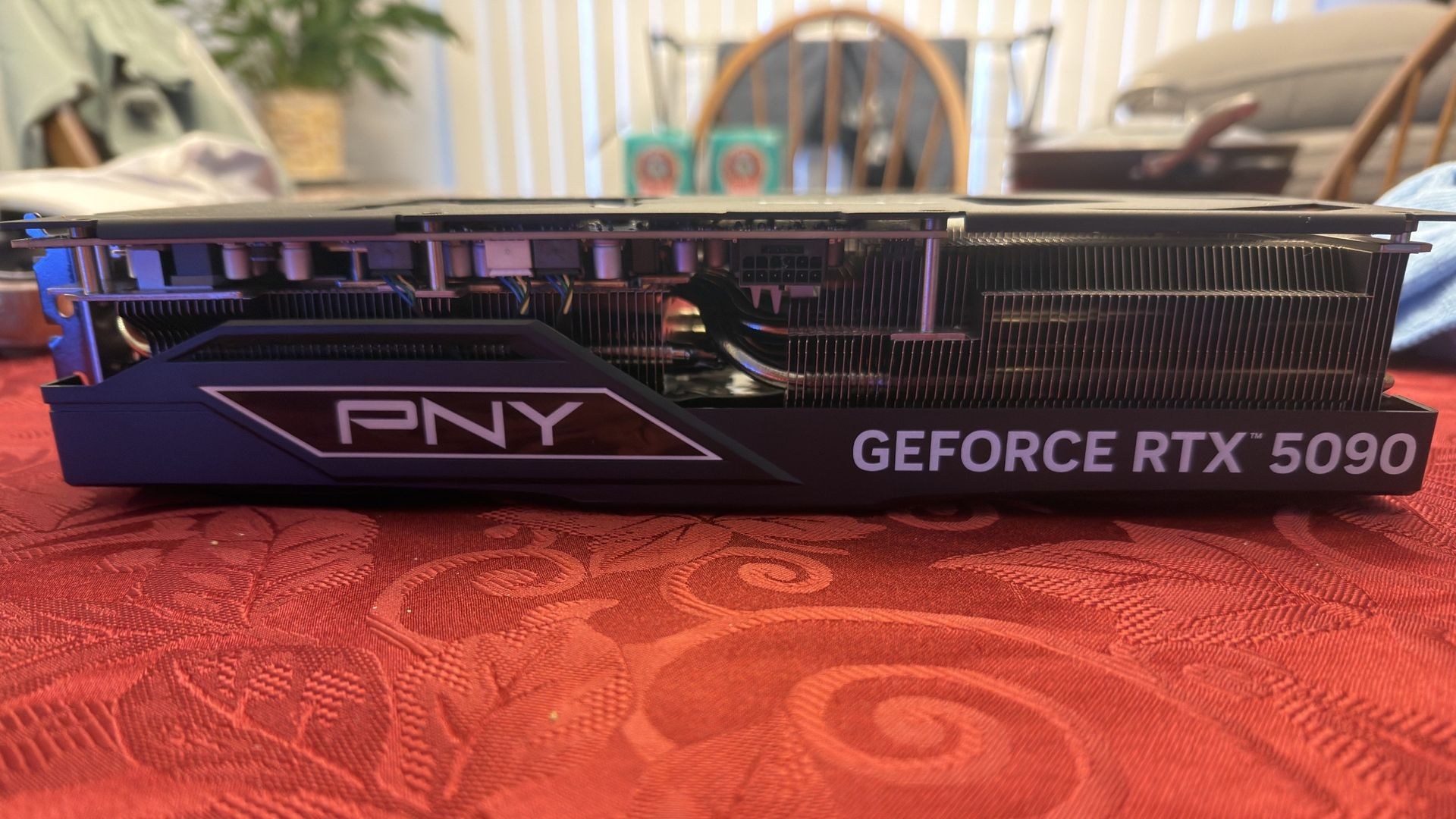
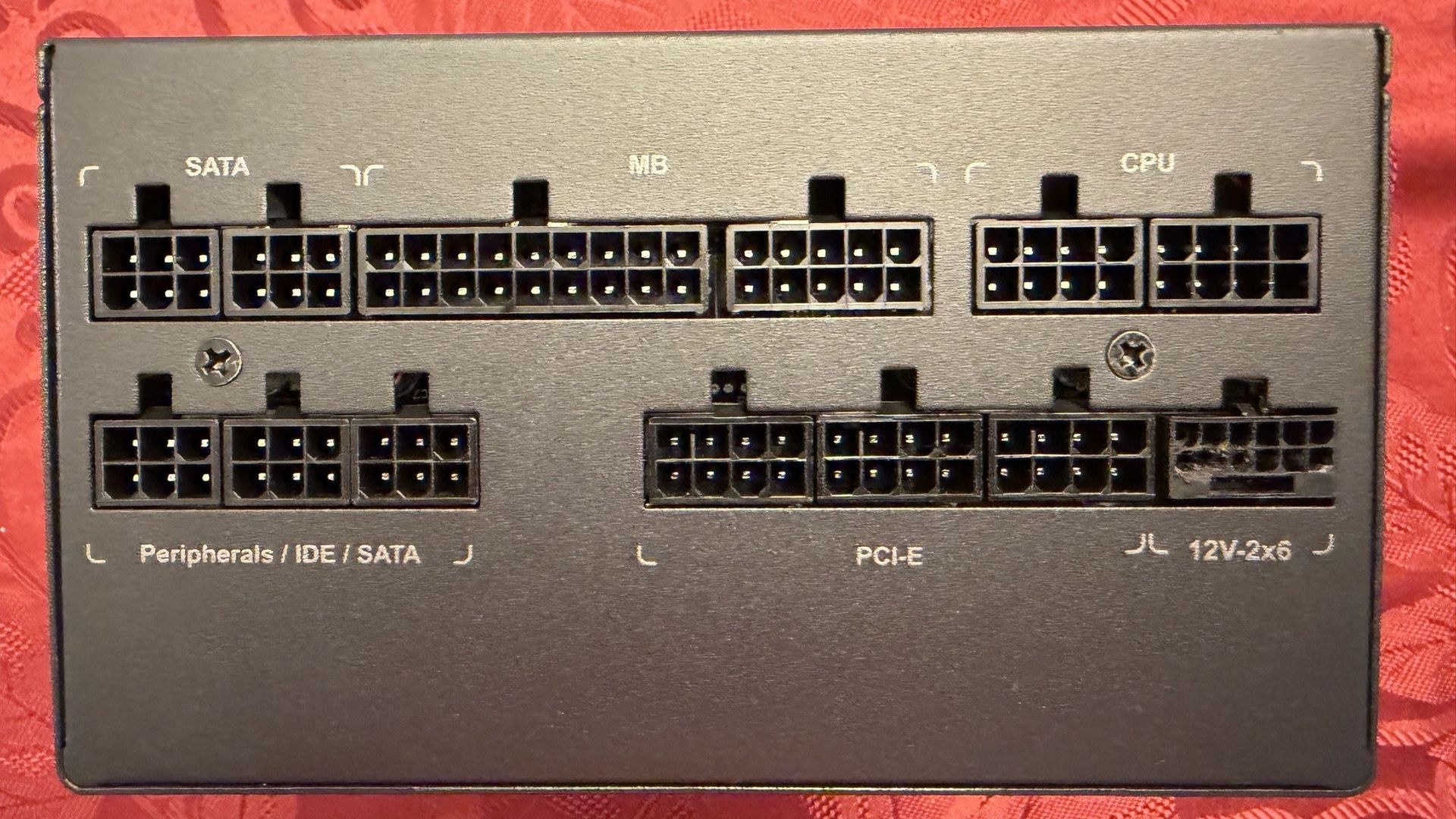
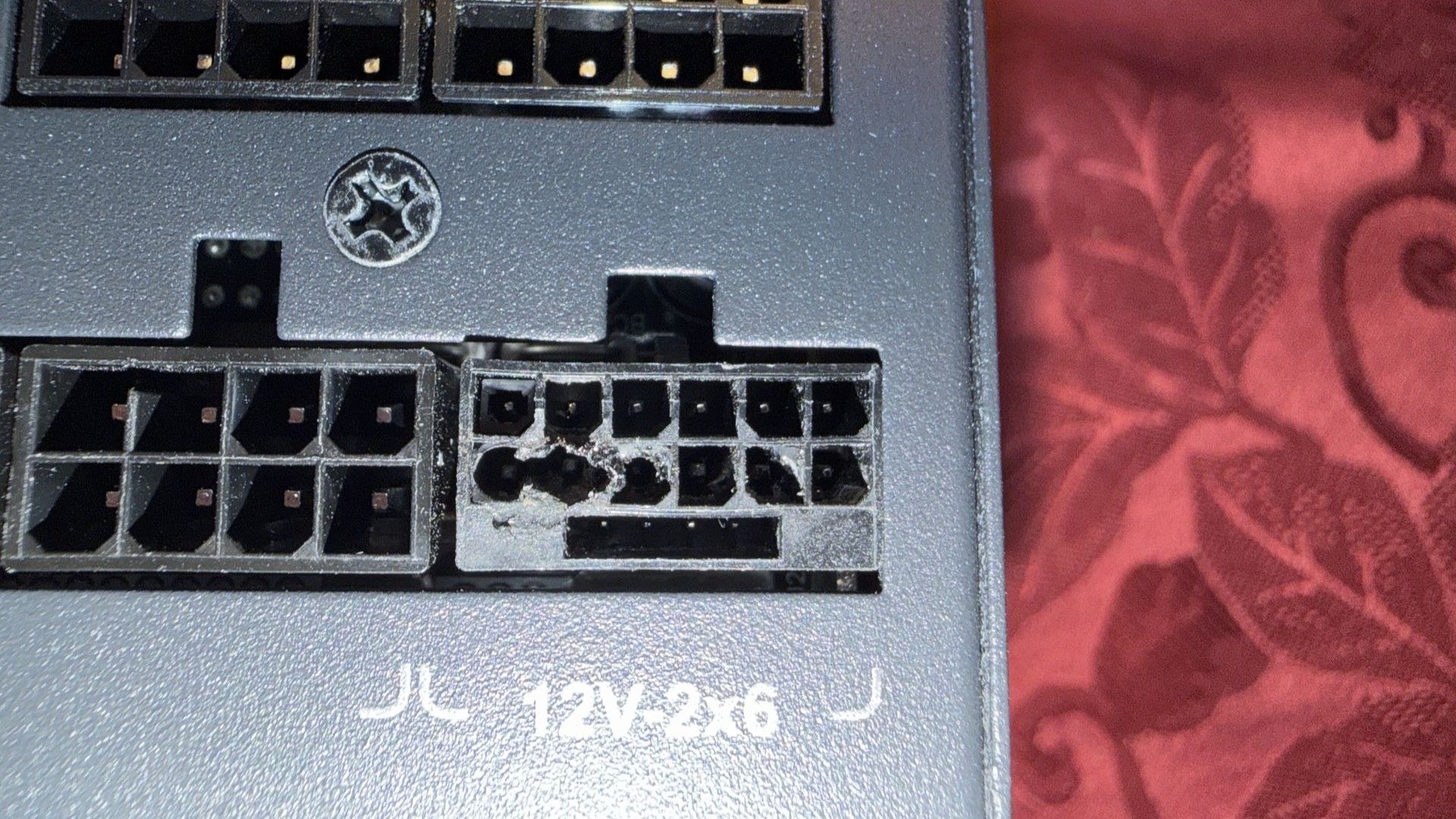
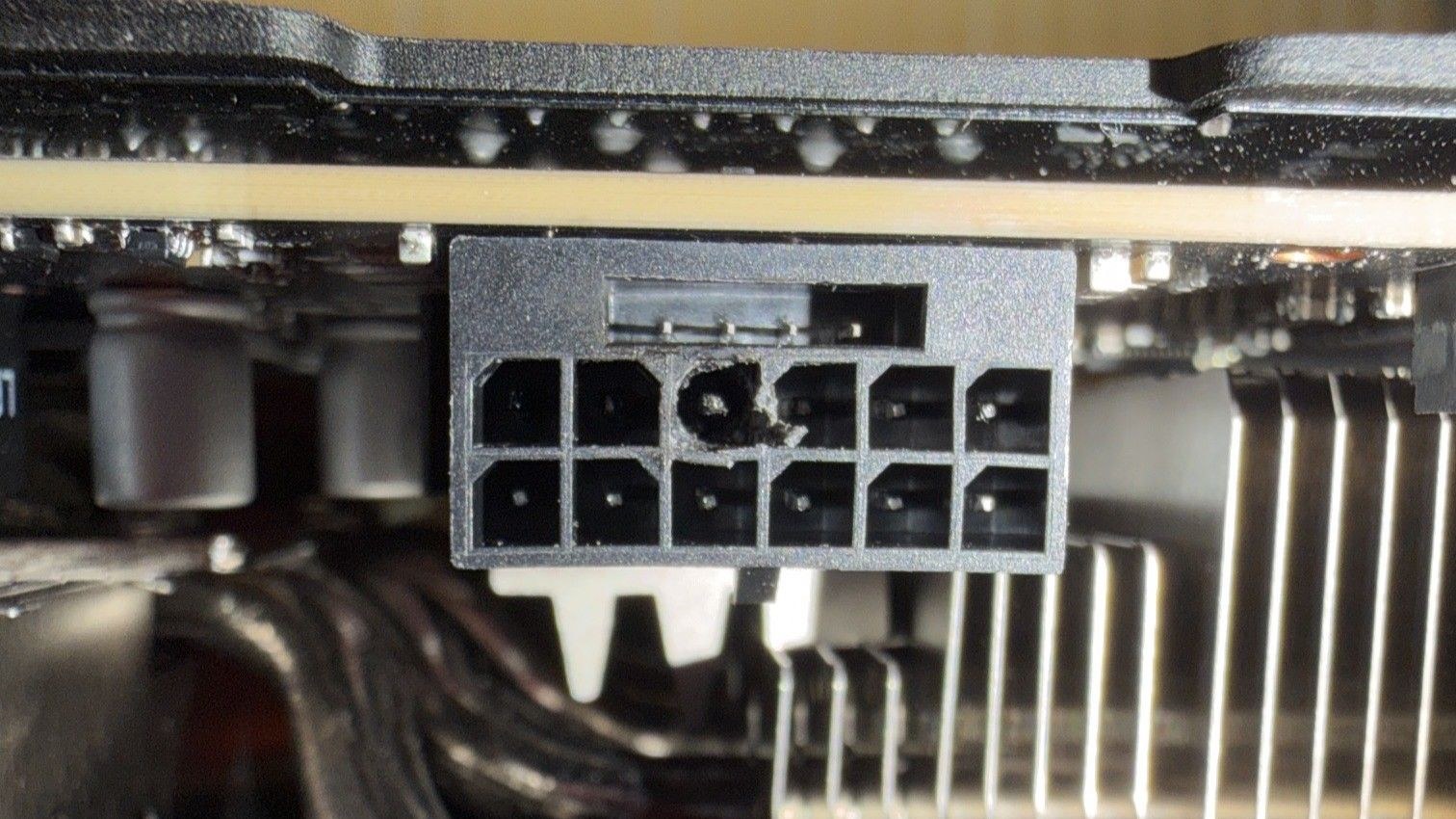
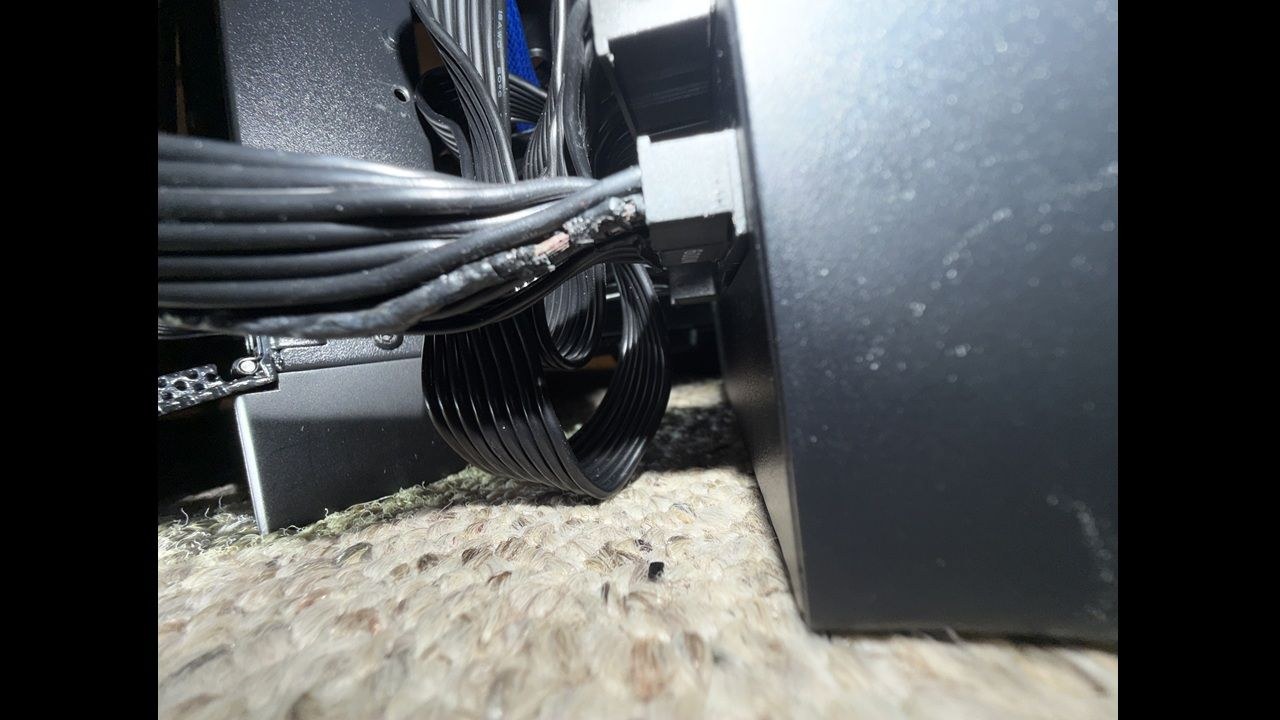
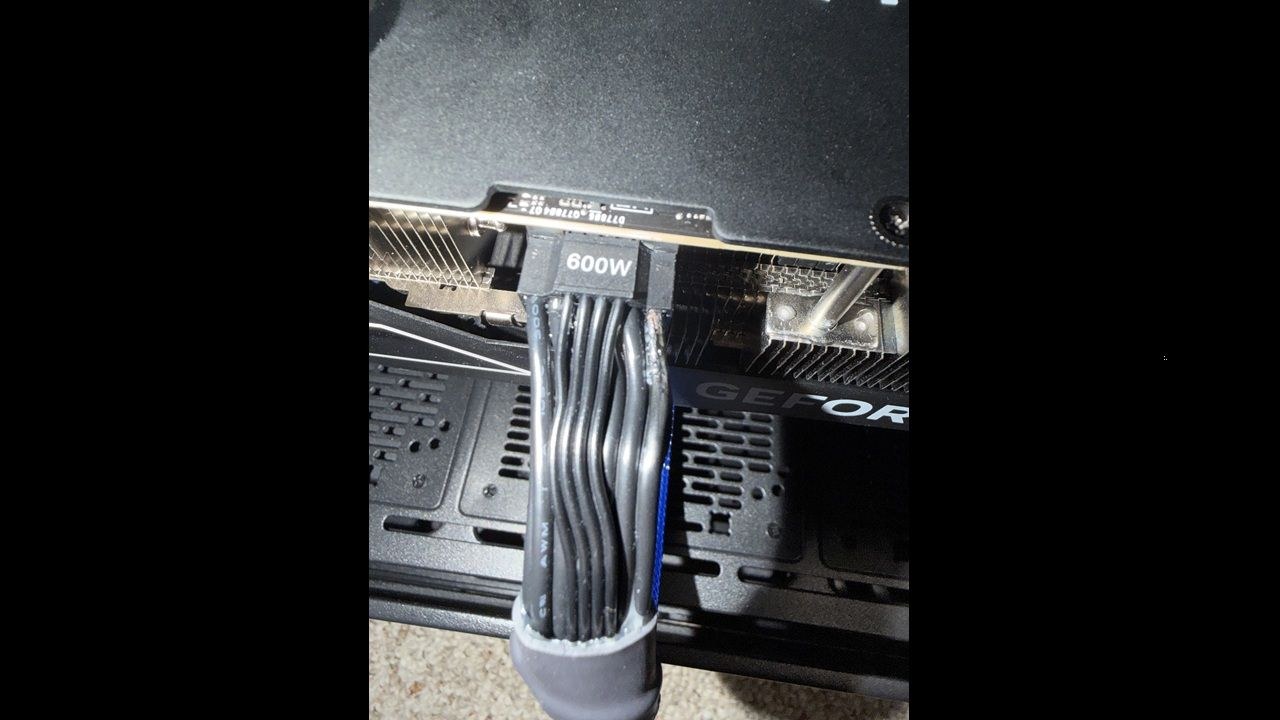
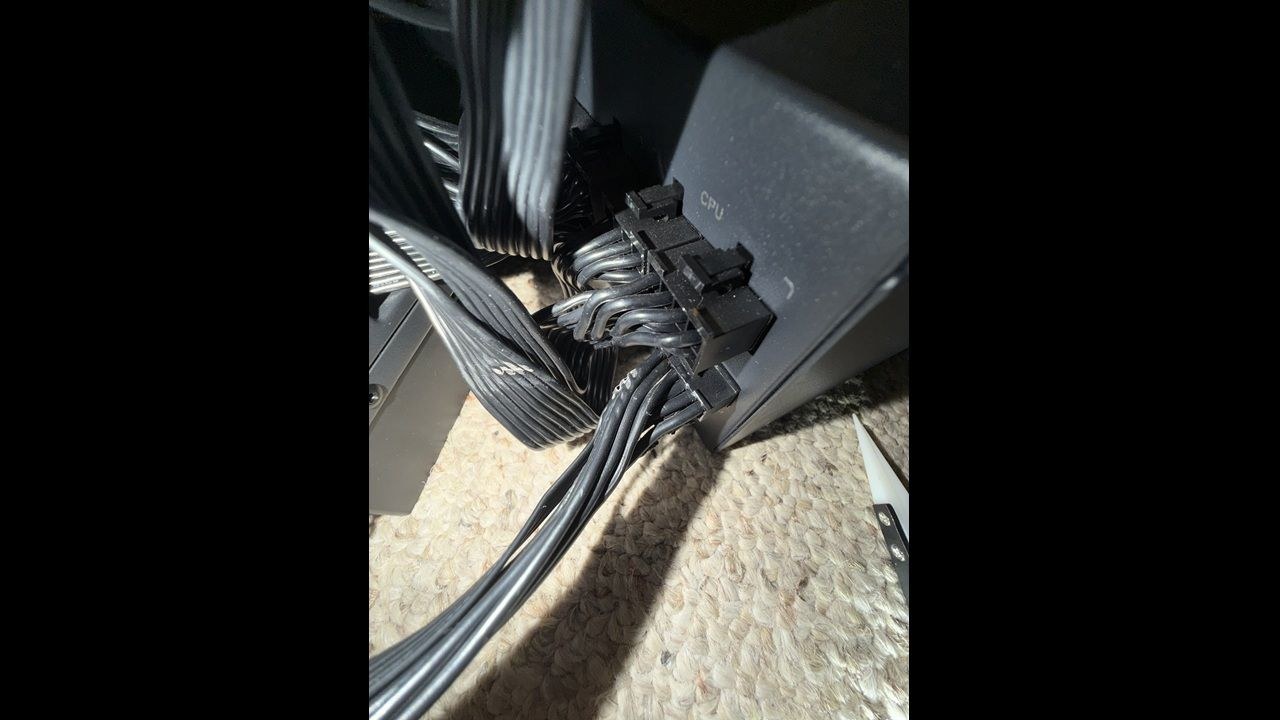
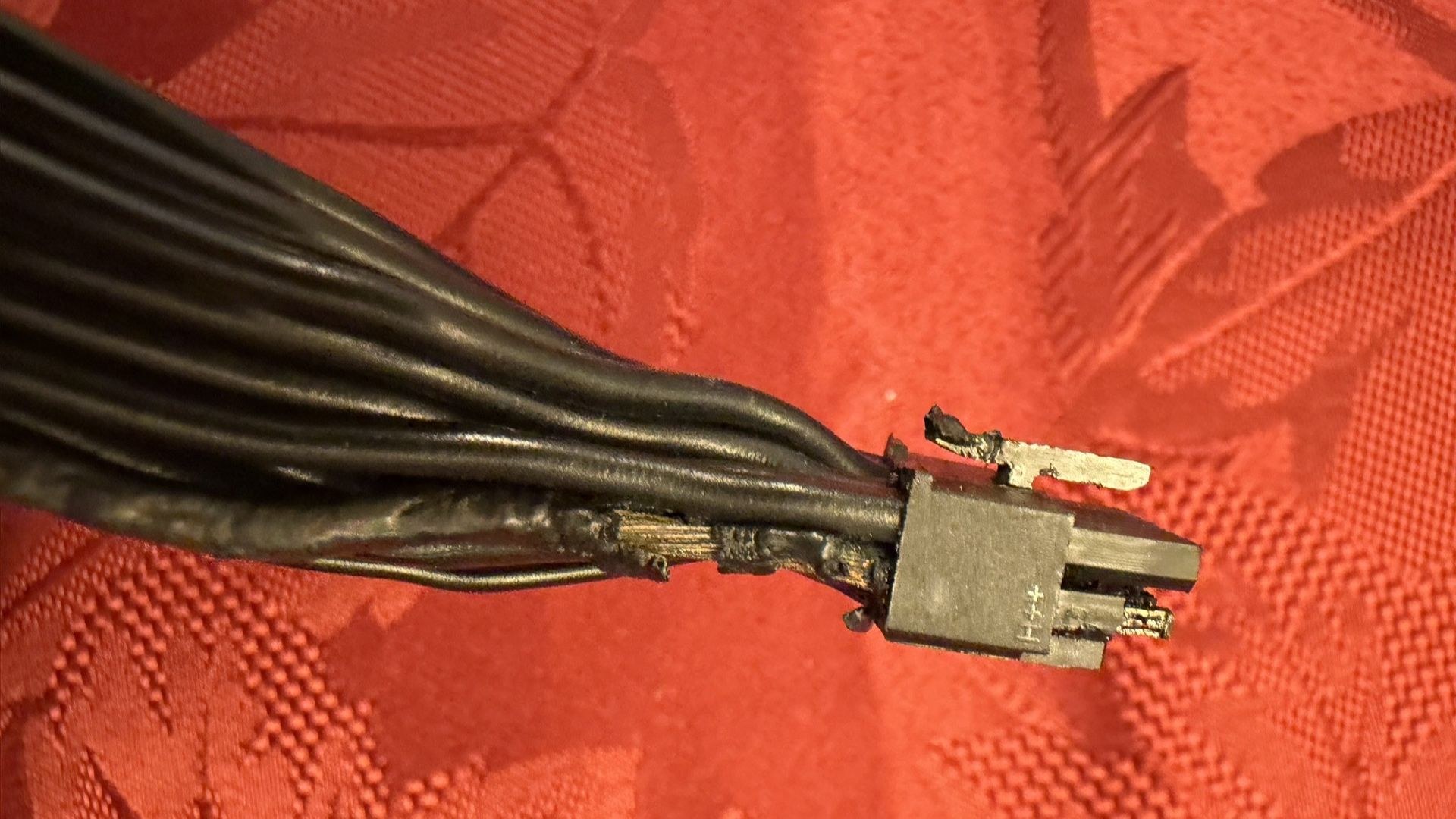
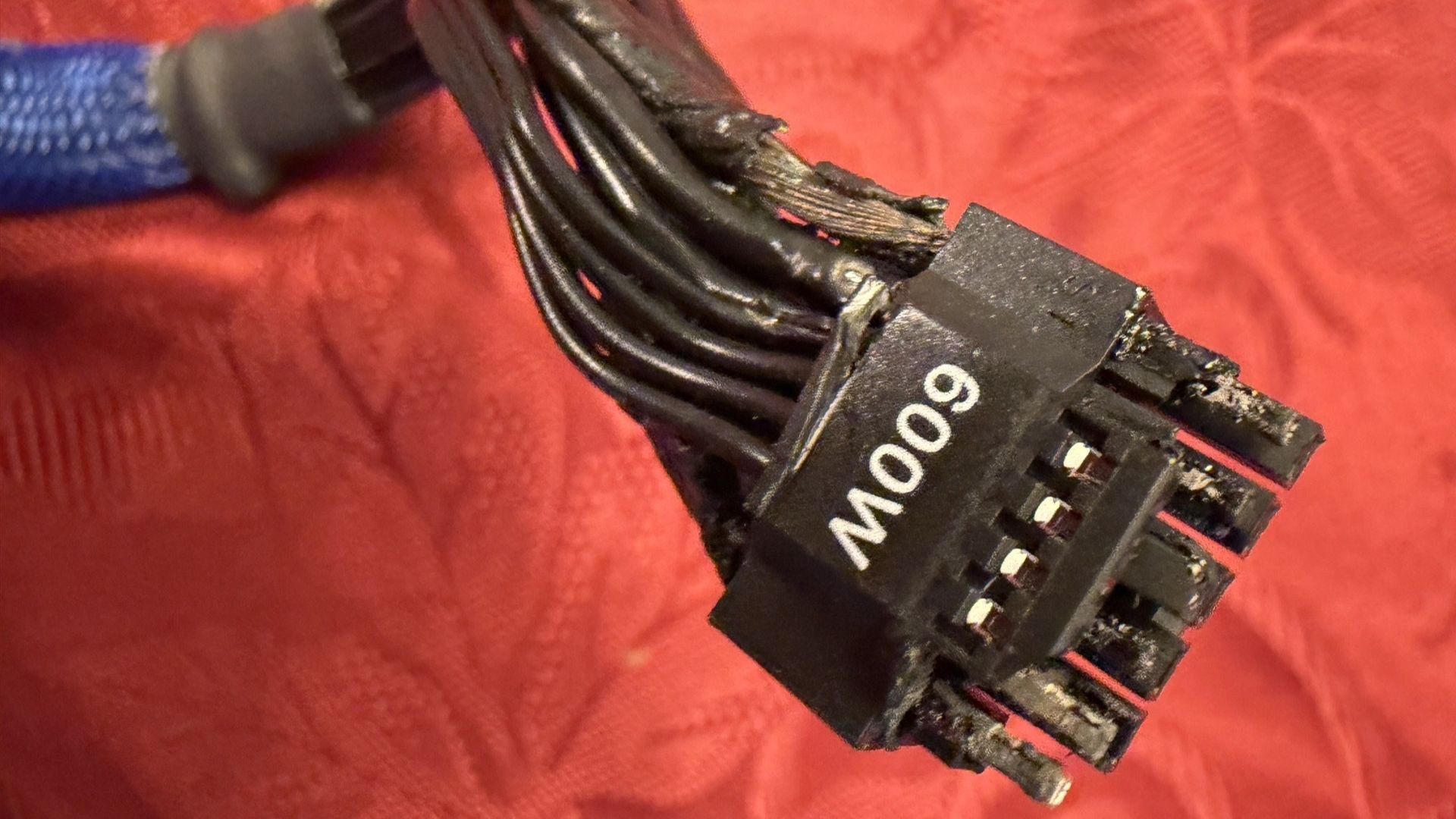
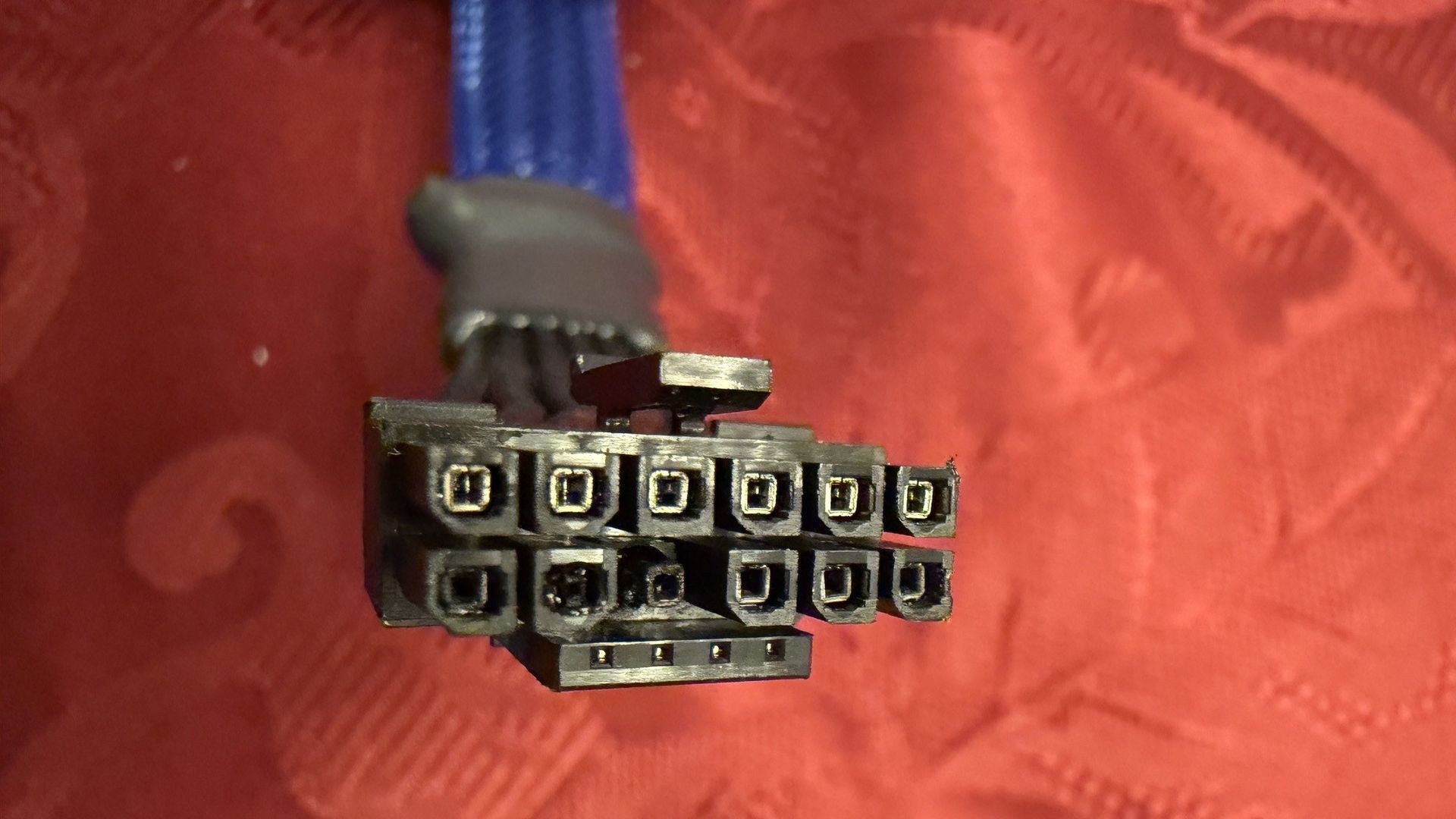
On August 26, DeMarco opened a support ticket with Digital Storm under his father's name and later submitted photographs. The ticket closed on August 31 following a phone conversation. According to the summary, Digital Storm acknowledged a "faulty 12VHPWR cable that melted" and suggested DeMarco pursue a Return Merchandise Authorization (RMA) with PNY since the system was "far out of warranty." DeMarco also mentioned the possibility of having the GPU repaired at a third-party service center to replace the power connector.
On September 8, DeMarco exchanged emails with PNY requesting an RMA and invoking the three-year warranty. He also asked whether PNY offered repair services for the damaged unit. After he provided the receipt and damage photographs, a PNY representative raised an objection: Digital Storm had used non-standard cables.
We want to clarify an important part of the warranty regarding the power connection to the GPU. All PNY GPUs that require a 16-pin (12VHPWR / 12V-2x6) input include a PNY-approved power cable or adapter in the box. This cable is the only configuration covered under warranty. If a third-party power cable, adapter, or PSU cable is used and damage occurs — including melting, burning, overheating, or deformation of the connector — PNY cannot accept the product under warranty. Damage caused by non-PNY cables falls under the responsibility of the manufacturer of that cable or power supply.
PNY support representative
DeMarco pressed back with follow-up questions: Did PNY publish a list of approved cables? Was the bundled adapter the only supported option, rather than standard ATX cables from a power supply? Did authorized system builders receive different treatment regarding cabling?
The answers proved unhelpful. PNY stated it did not publish such a list and that the bundled adapter was not automatically the only supported configuration. Regarding authorized builders, PNY clarified that while machines from such partners received coverage, their cabling choices did not.
Uncertain of his next move, DeMarco filed a complaint on September 16 with the Consumer Product Safety Commission's SaferProducts.gov database. PNY responded to inquiries from the publication with a statement: "PNY stands behind its GeForce RTX graphics cards, including those sold through our authorized system builder partners. We are presently reviewing this case and will be engaging the customer directly. PNY's ongoing commitment to its customers includes providing clear terms, policies and processes, and making adjustments where appropriate." Digital Storm declined to comment.
DeMarco subsequently inquired whether PNY offered paid repair services outside warranty coverage. They did not. He had also learned of another case in which PNY rejected an RMA for using a cable supplied with an ASRock power supply rated for 1,600 watts. Digital Storm's warranty states that "After the first year, Digital Storm will help replace any defective parts for the customer as long as those parts are still under warranty with the manufacture." DeMarco claims Digital Storm told him there was no point in pursuing the matter since PNY had already declined, though no written record of this conversation exists.
What resolution looks like
DeMarco's preference would be a refund for the GPU rather than a replacement. "In an ideal situation I would get a refund for my PNY RTX 5090 instead of [having] it replaced because I do not feel safe leaving my computer to run anymore without me if it has a PNY RTX 5090 in it," he explained. He also contended in correspondence that "a known problem with the PNY RTX 5090 power connector melting that is happening to many people" exists.
This characterization requires clarification. While numerous reports have surfaced over the years of GPUs with 12VHPWR connectors melting across both RTX 4090 and RTX 5090 models from various manufacturers, the issue is not specific to PNY. The problem stems from the standardized connector itself, defined by the Peripheral Component Interconnect Special Interest Group (PCI-SIG). In 2022, PCI-SIG notified members to conduct safety testing and help prevent user error.
Even if DeMarco received a refund and purchased an RTX 5090 from a different manufacturer, he could encounter identical problems. Digital Storm does not guarantee a specific brand. The company's website states: "Digital Storm will use a top brand name graphics card from the likes of ASUS, PNY, MSI, etc... An example would be the ASUS TURBO series."
Either company could choose to assist DeMarco as a gesture of goodwill. PNY's warranty language does not specify which power cables are acceptable, though examining competitors' policies reveals similarly ambiguous terms. MSI's warranty explicitly states coverage can be voided by "any breakdown or damage caused by the use of parts or software not authorized or recommended by MSI." Asus employs similarly vague language to PNY. PC building inherently involves combining components from multiple manufacturers.
Logically, Digital Storm would seem the obvious party to help. However, DeMarco and his father allowed the expensive system to remain boxed for more than a year. Although testing the machine upon arrival was prudent, the decision to purchase well in advance ultimately consumed the warranty period. The system builder appears to have no further obligation.
Guidance for prebuilt buyers
Selecting your own power cables is straightforward when building a PC yourself. When purchasing a prebuilt system, the builder makes those decisions on your behalf.
Examining warranty terms for every individual component in a system—assuming you even know which components you're receiving—proves burdensome. Reviewing the single warranty document from a system builder, however, can clarify what support you might expect later. Alternatively, purchasing from a company that manufactures both the GPU and power supply, such as Asus or MSI, eliminates ambiguity about cabling responsibility. If you're buying as a gift, ensuring the recipient has time to use most of the warranty period matters significantly, particularly for expensive items where component failure is possible. Extended coverage represents another option worth considering.
DeMarco verified all connections before use—a practice worth adopting regardless. While you shouldn't need to perform such checks, doing so provides additional security. Simultaneously, confirm that RAM and GPU are properly seated.
For those building their own systems
When assembling your own PC, you manage each warranty independently. To adopt an extremely cautious approach, you could restrict yourself to using only the PSU adapter included with most RTX 4090 and 5090 cards—a 16-pin power connector that links to four standard 8-pin PCIe power connectors from the power supply. This strategy, however, eliminates many cables from reputable power supplies that might eliminate the need for adapters entirely, resulting in cleaner builds.
Though DeMarco's warranty with Digital Storm has expired, PNY's approach may reflect broader industry practice. The same applies to Asus, MSI, Gigabyte, and other GPU manufacturers, including Nvidia. Perhaps the highest-end GPUs warrant inclusion of both adapters and complete 16-pin ATX cables in the box.
PC building centers on customization. Yet the evidence suggests that as builds become more customized, manufacturers of premium GPUs grow less willing to assist with replacements when problems arise—even when, as with the 16-pin connector, the risk affects nearly anyone.