Europe's AI caution clashes with escalating security threats, analyst warns
While the U.S. embraces AI agents, European skepticism about the technology is leaving enterprises vulnerable to AI-powered cyberattacks, according to Constellation Research.
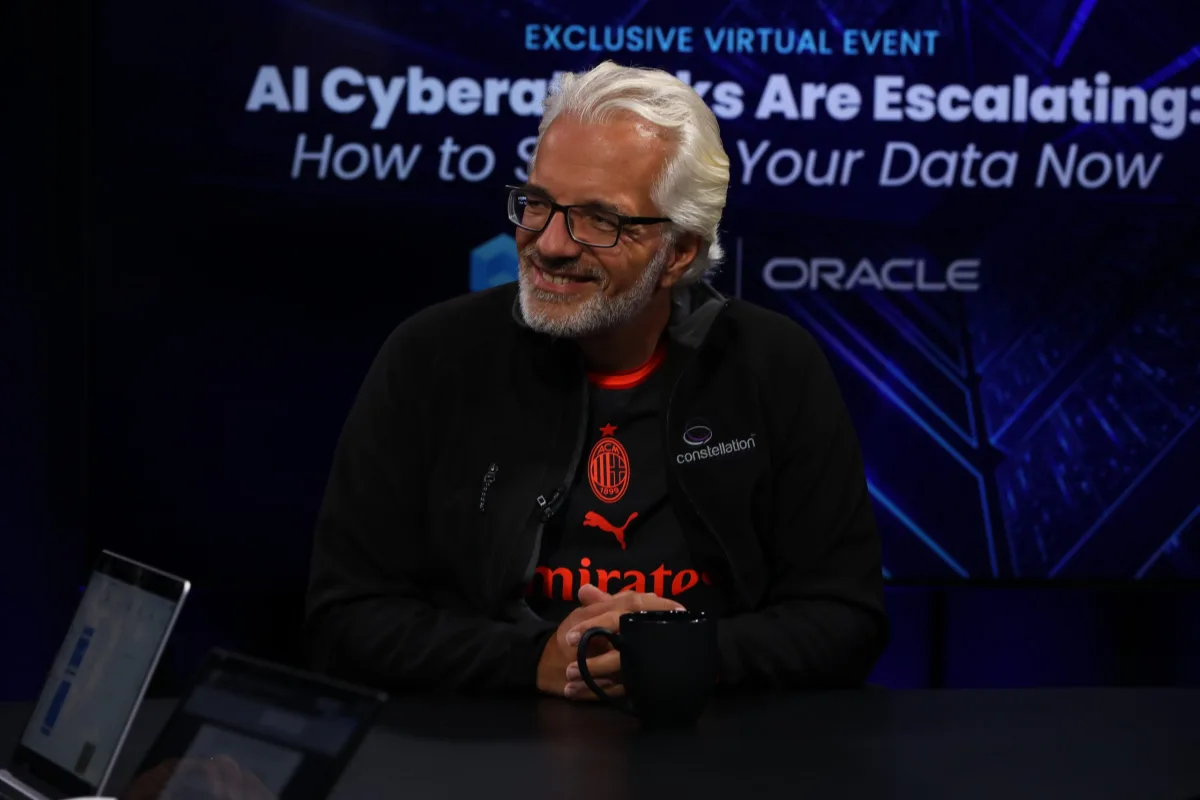
Artificial intelligence remains a contentious topic in Europe, yet the continent faces mounting threats from AI-driven cyberattacks regardless of its reservations. Holger Mueller, vice president and principal analyst at Constellation Research Inc., contends that European organizations must fundamentally shift their stance on AI adoption to both defend their systems and keep pace with American competitors. According to Mueller, the reality is inescapable: human defenders cannot match the capabilities of AI-based threats.
Mueller made these remarks during a discussion with Dave Vellante, chief analyst for theCUBE Research, and Krista Case, principal analyst for theCUBE Research, at Oracle's "AI Cyberattacks Are Escalating: How to Secure Your Data Now" event. The conversation, broadcast exclusively on theCUBE, SiliconANGLE Media's livestreaming studio, examined both AI cybersecurity strategies and Oracle Corp.'s agentic AI offerings.
Skepticism toward autonomous systems
Mueller acknowledged that people inherently distrust automation. He suggested that addressing security vulnerabilities in agentic AI systems may require deploying additional AI itself. He pointed to the Hugging Face security incident as an illustration: an autonomous AI agent executed an intrusion, and defenders subsequently relied on an open-weight model to examine the breach after commercial frontier models declined to process the forensic data.
Europe particularly lags in this security domain. Mueller stated: "They need to resolve the tech debt they accumulated over 20 years as fast as possible because AI really makes you pay for tech debt. You may not have managed, may not have experienced on-premises [solutions]. But now you can only consume pretty much all of AI from an elasticity perspective."
Mueller also addressed the broader skepticism toward innovation originating in the United States. "Europe is traditionally always skeptical of innovation coming from the U.S.," he said. "With AI, there's a lot of conservatism, a lot of waiting. Sovereign cloud is a big topic, but it's also a big excuse. It's not a good idea waiting for sovereign cloud when you're doing business on a global level, like many European countries are doing."
Agentic AI and backend infrastructure
Constellation Research recently published an analysis examining "agentic AI washing," a phrase describing vendors who overstate the degree to which they have integrated agentic AI capabilities into their offerings. When Constellation evaluated Oracle's AI database portfolio against its rigorous benchmarks, the firm determined that Oracle's offerings genuinely delivered agentic AI functionality without engaging in such exaggeration.
Mueller outlined a timeline for agentic AI development: "The agentic AI uptake last year was for the advanced companies to create the data source, the data plane for those agents. This year, everybody's fighting about what is the better agentic framework. Next year is going to be the big renaissance of scaling the backend systems. And this is a great message for Oracle customers knowing that they have a highly scalable database."
Oracle's long-standing position as a dependable transactional database vendor has positioned the company to benefit from this shift. The company's approach—offering customers a conventional database alongside the option to migrate external workloads to a data lakehouse—aligns with emerging requirements. Database scalability proves essential for agentic systems to function effectively, enabling organizations to transition to cloud infrastructure when appropriate while maintaining agent performance. Mueller emphasized that enhanced security remains necessary at every layer of this architecture.
https://www.youtube.com/embed/_B9G0AmVbwA?feature=oembed
Mueller outlined specific security measures organizations should implement. "You need to have a selection in saying which models you use and you need to have a playground to figure that out," he explained. "You need to band up with a few CISOs to do red team, not red hat, but black hat, white hat attacks or whatever [you need] to figure out what is going on there. One side point on this … is if you think state actors will spy on you, you need to be quantum safe."